
Veneto · Venezia · Italy
Venice
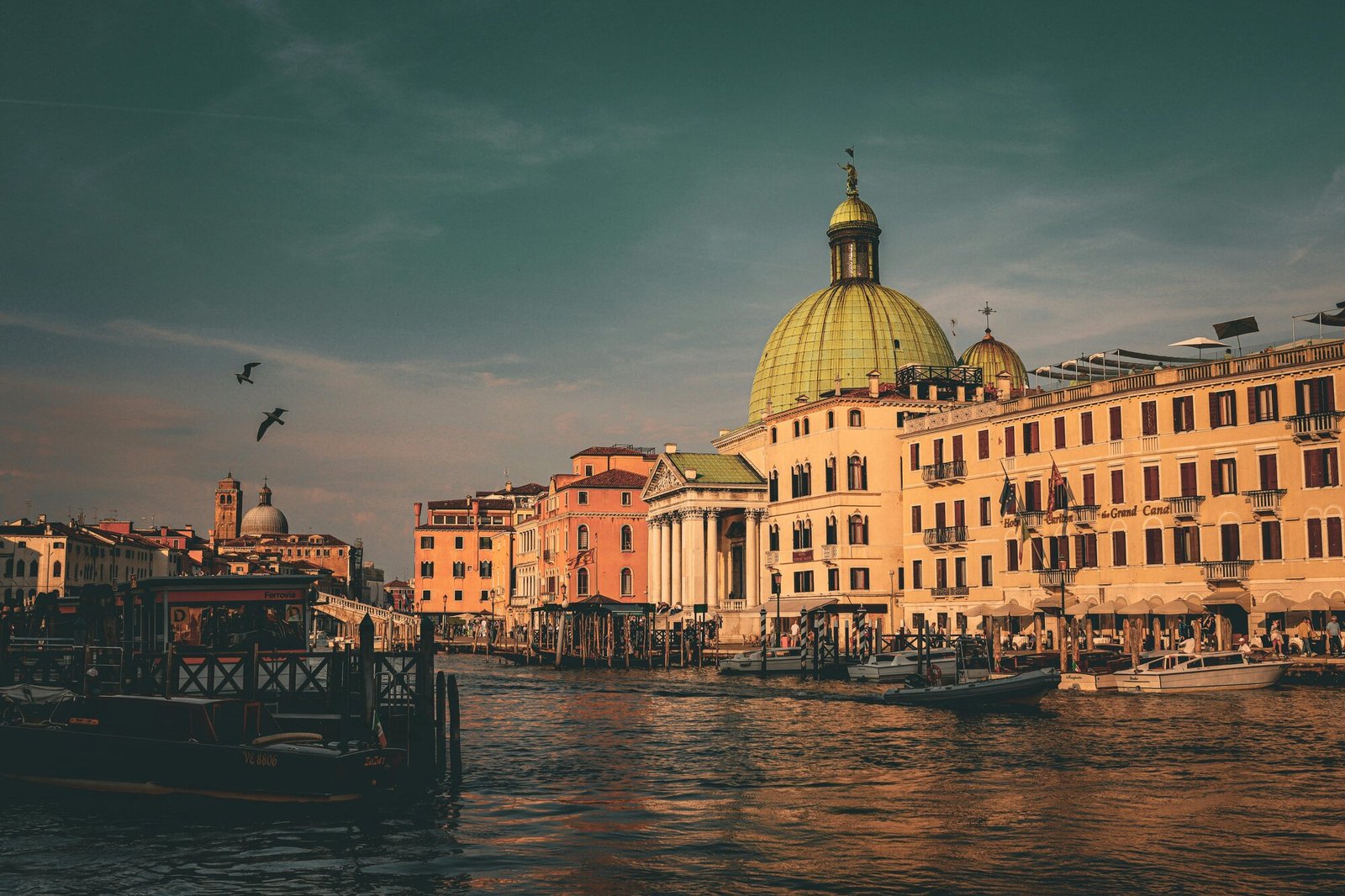
A city of islands without cars, connected by bridges and renowned for its Gothic and Byzantine architecture, facing challenges like flooding and over-tourism.
At a glance
About Venice
Venice, or Venezia in Italian, is a distinctive city located in northeastern Italy that has existed since the 5th century AD, emerging from a series of islands in the Venetian Lagoon. Renowned for its extensive canal system, the city boasts over 150 waterways and 400 bridges linking its islands. As a car-free urban environment, Venice depends on boats for transportation. This provides both residents and visitors with an exceptional urban experience. The architecture in Venice showcases Byzantine and Gothic influences, with landmarks such as the Basilica di San Marco highlighting the city’s narrative. Despite challenges like flooding and over-tourism, Venice remains a prominent destination for international travelers.
✓ Pros for expats
– High-quality healthcare with extensive service availability.
– Scenic canals and a rich cultural history enrich daily life.
– Effective transportation system allows easy navigation throughout the city.
– Low unemployment rate ensures economic stability and job prospects.
– Active expat community fosters integration and social connections.
– Mild climate with enjoyable weather year-round for outdoor activities.
– Excellent infrastructure supports a comfortable lifestyle.
– Access to quality educational institutions for individuals of all ages.
– Good air quality encourages a healthier way of living.
– Numerous tourist attractions offer a variety of leisure activities.
! Things to consider
– The constant influx of tourists can disrupt everyday life.
– Housing prices are elevated due to tourist demand.
– Limited parking and driving space is available.
– Canals may emit unpleasant odors during warm weather.
– Flooding can occasionally pose challenges for residents.
– Internet connectivity may not reach the standards of larger urban centers.
– Some residents feel the pace of life is too slow.
– Shopping options can be limited outside tourist areas.
– Language barriers may impede integration for some expatriates.
– Local bureaucracy can be frustratingly intricate and sluggish.
Where is Venice
Getting there
Venezia boasts strong connectivity, accessible via Marco Polo Airport and Antonio Canova Airport. The town is also well-serviced by major roadways, including the A4 motorway, facilitating travel to nearby cities. Train services further enhance its transportation options, contributing to its excellent infrastructure ratings.
Getting around
Discovering the city is best accomplished by water bus or gondola, with extensive vaporetto services linking the islands. Navigating the elaborate canal system is both efficient and picturesque, while walking allows for intimate exploration of Venezia’s hidden alleys and bridges, although it can be quite complex for newcomers.
Housing & cost of living
Estimated cost of an 80 m² home: €296,000
Housing availability: High
Cost of living
Venezia presents a unique combination of affordability and economic stability, making it appealing for both expatriates and investors. With a robust local economy supported by low unemployment rates and reasonable income levels, residents find daily living expenses manageable, though higher than in some other areas. Housing options are diverse; while apartments in the city center can be expensive, alternative options exist outside the primary tourist zones. The overall economic vitality and opportunities create a favorable environment for those considering relocation, positioning Venezia as an attractive choice despite some costs.
Climate & weather
Above Average (51st-60th percentile)
Somewhat Low (21st-30th percentile)
Average (41st-50th percentile)
High (71st-80th percentile)
Air quality & environment
Air quality rating: ★★★★★
In Venezia, the air quality reflects a moderate mix of pollutants. According to assessments, particulate matter and ozone levels remain at a generally acceptable level,neither exceptionally clean nor significantly poor. Notably, nitrogen and sulfur dioxide concentrations are commendably low, suggesting effective management or lesser emissions of these gases. For those considering residing here, the air quality poses no major obstacles, supporting a conducive atmosphere for daily activities and leisurely strolls along its historic canals. Overall, Venezia’s air quality balances urban needs with maintaining acceptable standards of purity.
Healthcare & safety
Road accidents: 36.0 per 10k inhabitants.
ULSS 3 Serenissima oversees Venice and its lagoon , Venice itself, Mestre, the Lido, Chioggia, Mira. It has a composite score of 60/100, placing it in the top decile nationally. Hospital care is outstanding (68), the highest hospital rating of any Italian authority. However, community care is rated lower (42) , the lowest among Veneto AULSS, partially reflecting the demographic profile of an ageing population in a city where primary care delivery is challenging. It excels in acute care but is less effective in chronic management.
Internet & connectivity
Transport & proximity
✈️ Airports
| Airport | Drive | Score |
|---|---|---|
| Marco Polo (Venice) | 13 min | 8 |
| Antonio Canova (Treviso) | 32 min | 7 |
| Valerio Catullo (Verona) | 69 min | 7 |
🚂 Rail stations
| Station | Drive | Score |
|---|---|---|
| Venezia Santa Lucia | 18 min | 10 |
| Venezia Mestre | 17 min | 10 |
| Venezia Mestre Ospedale | 20 min | 7 |
What's nearby
Life in Venice
What to see & do
- St. Mark’s Basilica: Marvel at the beautiful mosaics and architecture of this iconic church.
- Doge’s Palace: Discover the historical residence of Venetian leaders.
- Rialto Bridge: Stroll across this famous bridge for stunning views of the Grand Canal.
- Grand Canal: Enjoy a Vaporetto ride or gondola through Venice’s main waterway.
- Piazza San Marco: Explore the main square and relish cafes and historic landmarks.
- Murano and Burano Islands: Visit the colorful houses and glass factories.
Neighbourhoods
– **Cannaregio**: Known for its historic Jewish Ghetto and a primarily residential atmosphere, providing a glimpse into authentic Venetian life without heavy tourist influence.
– **Santa Croce**: A partial transport hub of Venice with the Piazzale Roma bridge, balancing residential and tourist interests.
– **San Polo**: The smallest sestiere, home to the renowned Rialto Market and significant for its lively history as a trade center.
– **Dorsoduro**: Home to numerous prominent art museums, including the Peggy Guggenheim Collection, marking it as the cultural heart of the city.
– **Castello**: The largest district, featuring both the lively Via Garibaldi and tranquil landscapes around San Pietro di Castello.
– **San Marco**: The political and religious core of the city, famous for landmarks like St. Mark’s Basilica and the Doge’s Palace.
Local cuisine
The culinary offerings in Venezia, part of the Veneto region, are rich with traditional dishes such as Sarde in saor, Scampi alla veneziana, Bigoli in salsa, Risi e bisi, and Bacalà mantecato, reflecting the region’s seafood traditions. The array of dining options is extensive, featuring local establishments presenting authentic Venetian flavors as well as international cuisine venues catering to various tastes. Notably, Venezia hosts several Michelin-starred restaurants, including Ristorante Glam, Ristorante Quadri, Il Ridotto, and Osteria Da Fiore, which epitomize fine dining in the region. The presence of international dining establishments has grown, showcasing cuisines from diverse cultures and providing choices for those seeking culinary variety alongside traditional Venetian dishes.
Where to shop
The shopping scene includes a mix of budget trinket shops and mid-range to high-end boutiques primarily found along popular pedestrian streets. Key offerings feature local crafts, such as glassware and lace items, alongside traditional masks. Specialty food stores provide regional delicacies, while various bookstores cater to literary enthusiasts. Open-air markets enhance the shopping experience with fresh produce and artisanal goods, thus accommodating a wide range of consumer preferences.
Green areas & parks
Venice features a variety of outdoor activities and green spaces suitable for expatriates and retirees. Giardini della Biennale offers a significant green area and hosts the famous art exhibition, La Biennale di Venezia. Giardini Papadopoli, situated near Santa Lucia train station, includes a playground ideal for families. Parco Savorgnan, also close to Santa Lucia, is discreetly located and features a children’s play area. Isola San Giorgio provides expansive views and a garden maze. For more informal green areas, Campo Santa Margherita and Campo San Vio serve as open squares perfect for leisurely visits and social gatherings.