
Veneto · Belluno · Italy
Belluno
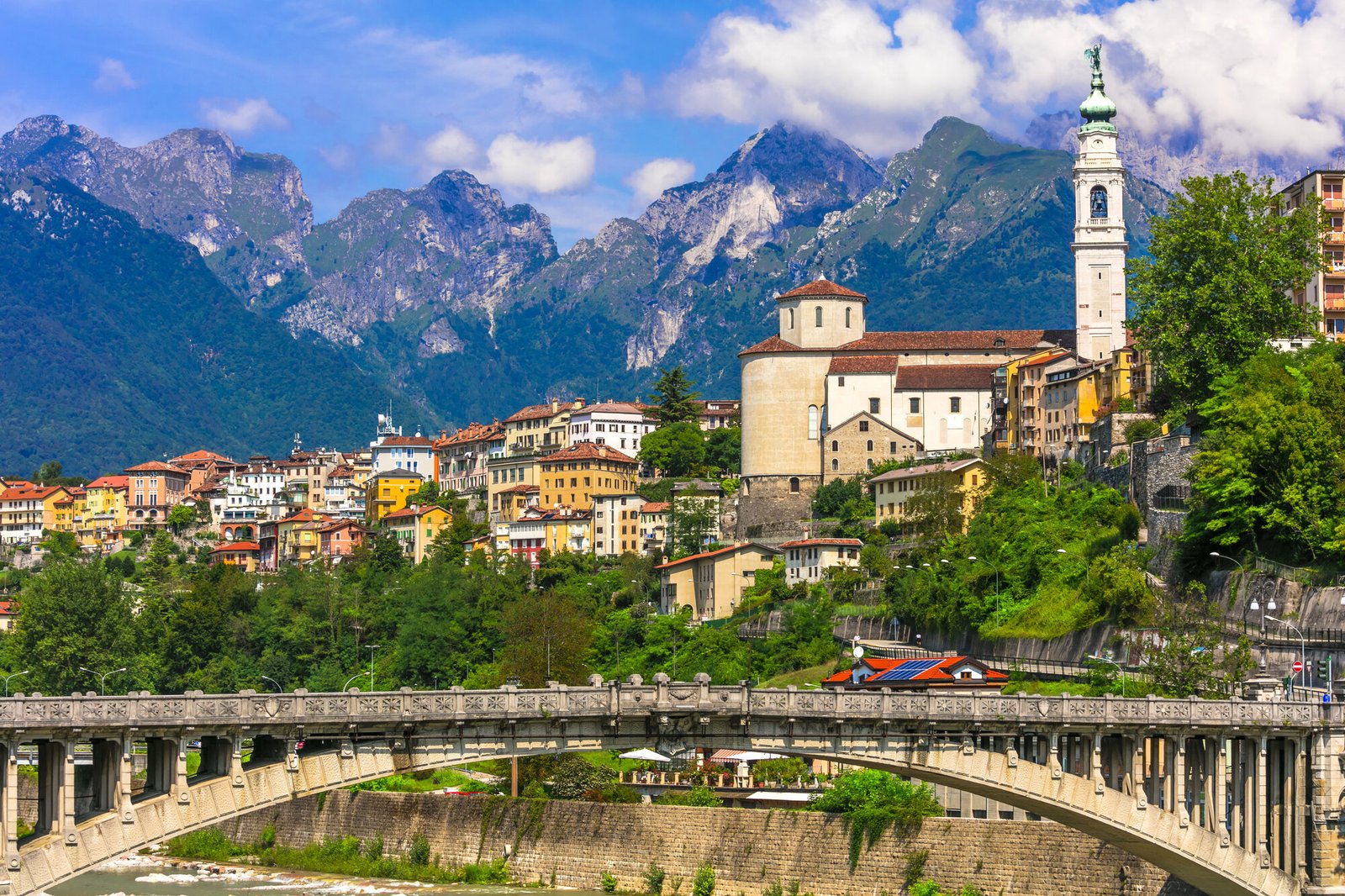
Entry point to the Dolomites, featuring a combination of outdoor pursuits, rich cultural heritage in a medieval atmosphere, along with a mix of traditional and modern industries. Perfect for nature enthusiasts and history lovers.
At a glance
About Belluno
Belluno is a charming municipality located in the northern region of Veneto, Italy. This town serves as a key entry point to the Dolomites, a UNESCO World Heritage site, granting easy access to stunning mountain vistas and a range of outdoor activities.
As an economic center, Belluno hosts various industries, encompassing both traditional manufacturing and contemporary services. Its historic center, marked by medieval architecture, reflects the richness of its cultural legacy, which remains evident today.
Additionally, the town acts as an administrative and commercial hub for the nearby mountain communities. It offers educational facilities for a diverse student body, while the local transportation system effectively links it to major cities and nearby regions.
✓ Pros for expats
– High-quality healthcare services for residents.
– Excellent air quality, fostering a healthy lifestyle.
– Low unemployment rate, ensuring economic stability.
– Well-connected transportation system for convenient commuting.
– Rich cultural and historical heritage to explore.
– Opportunities for integration within the local community.
– Mild climate, ideal for outdoor activities throughout the year.
– Access to quality educational institutions for all ages.
– Limited tourist presence, preserving local charm and tranquility.
– Strong internet connectivity for remote work and communication.
! Things to consider
– Limited nightlife and entertainment options for enthusiasts.
– Smaller expat community may lead to feelings of isolation.
– Frequency of public transport can be erratic during off-peak hours.
– Local dialects might create communication challenges for newcomers.
– Some historical buildings may lack modern accessibility features.
– Weather can be overly humid or cold for some.
– Fewer shopping options compared to larger cities.
– Cultural events may not occur as frequently or diversely.
– Local cuisine might not appeal to all tastes.
– Integration may require effort and patience in close-knit communities.
Where is Belluno
Getting there
Belluno, situated in the Veneto region, provides reasonable connectivity. The closest airports are Treviso and Venice, both roughly an hour away. The town is reachable via major roadways, including the SS51. Local train stations offer limited yet adequate service to surrounding areas, with moderate connectivity scores.
Getting around
Belluno’s compact design makes it easy to navigate on foot, complemented by reliable local bus services. Taxis are available, and the town’s proximity to major roads ensures convenient access by car. Ample parking is available, making it convenient for both locals and visitors.
Housing & cost of living
Estimated cost of an 80 m² home: €95,760
Housing availability: High
Cost of living
Belluno presents an attractive option for those contemplating relocation, with an affordability profile that reflects both stability and opportunity. With low unemployment and a favorable median income, residents comfortably manage their living expenses. Housing costs are moderate, especially for rentals in suburban areas, facilitating easier settlement for families and individuals. The overall cost of living aligns well with quality of life, indicating a healthy economy where expats and investors can flourish without facing excessive financial burdens. Thus, Belluno is a prudent choice for a balanced lifestyle that doesn’t strain finances.
Climate & weather
Very Low (Bottom 10%)
High (71st-80th percentile)
Very High (81st-90th percentile)
Low (11th-20th percentile)
Air quality & environment
Air quality rating: ★★★★★
Belluno, set in Italy's beautiful surroundings, enjoys remarkably clean air, making it an appealing choice for those considering relocation or retirement. The town has commendable levels of PM10 and nitrogen dioxide, both of which are within good classifications, indicating low levels of these pollutants. While PM2.5 and ozone levels are slightly elevated, they remain in the fair category and still compare favorably to many other regions. Sulphur dioxide is extremely low, contributing to the overall attractiveness of Belluno's atmosphere. This balanced profile allows residents to relish the natural beauty without undue worries regarding air quality.
Healthcare & safety
Road accidents: 31.0 per 10k inhabitants.
ULSS 1 Dolomiti oversees healthcare in Belluno province , including Belluno itself, Feltre, Cortina d’Ampezzo, the Cadore, and the Agordino. With a composite score of 48/100, it is slightly below the national median. The data is best interpreted alongside geographical context: 1-year stroke survival ranks in the national top decile, while 30-day STEMI survival is among the lowest in Italy. Stroke patients who reach hospitals receive good care in Veneto’s rehabilitation network, but acute STEMI cases can struggle with long mountain drives to a catheter lab. Residents at cardiovascular risk should consider potential transfers to Treviso or Padova for acute cardiac treatment; stroke recovery and chronic management are well-handled locally.
Internet & connectivity
Transport & proximity
✈️ Airports
| Airport | Drive | Score |
|---|---|---|
| Antonio Canova (Treviso) | 48 min | 7 |
| Marco Polo (Venice) | 50 min | 8 |
| Friuli Venezia Giulia (Trieste) | 79 min | 7 |
🚂 Rail stations
| Station | Drive | Score |
|---|---|---|
| Belluno | 3 min | 7 |
| Santa Croce del Lago | 18 min | 7 |
| Ponte nelle Alpi-Polpet | 11 min | 6 |
What's nearby
Life in Belluno
What to see & do
- Piazza del Duomo: The central square of Belluno, showcasing the beautiful Cathedral of San Martino and the Palazzo dei Rettori.
- Museo Civico: Museum that displays the history and art of Belluno, located in the historic Palazzo Fulcis.
- Chiesa di San Rocco: A stunning church famous for its frescoes.
- Palazzo dei Vescovi: A historical palace that currently functions as a diocesan museum.
- Ponte degli Alpini: A picturesque bridge offering magnificent views of the Piave River and surrounding mountains.
- Chiesa di Santo Stefano: A Gothic church housing a rich collection of Renaissance artworks.
- Parco Nazionale delle Dolomiti Bellunesi: A natural park ideal for hiking, wildlife observation, and mountain vistas.
- Villa Buzzati: The former residence of author Dino Buzzati, now a museum dedicated to his life and works.
- Porta Rugo: A medieval gate that once served as the main entry point to the city.
- Basilica Santuario dei Santi Vittore e Corona: A basilica offering panoramic views and a serene atmosphere.
Neighbourhoods
– **Baldenich**: A residential area situated near the town center, providing various housing options and essential amenities.
– **Bersaglio**: Predominantly a residential neighborhood featuring local shops and services.
– **Borgo Garibaldi**: Recognized for its advantageous location near transport links, offering a mix of residential and commercial properties.
– **Borgo Piave**: Located by the river, this area includes both residential units and local businesses.
– **Borgo Prà**: Provides residential living with access to nearby local shops and community facilities.
– **Cavarzano**: A residential district situated on the outskirts, offering community services and scenic views.
– **Col di Piana**: Mainly residential with a tranquil suburban atmosphere.
– **Lambioi**: Known for its residential homes and tight-knit community feel.
– **Mussoi**: Features residential buildings with convenient access to nearby markets and shops.
– **Nogaré**: A residential area that offers a variety of housing options for both locals and newcomers.
– **Centro Storico**: The historic center, rich in cultural landmarks and featuring a blend of residential and retail spaces.
Local cuisine
Belluno’s food culture features rich traditional dishes, prominently including casunziei (half-moon-shaped ravioli), pastin (a specialty sausage), and various cheeses like Schiz and Piave. The culinary scene highlights a strong use of meat and cheese, influenced by local alpine traditions and fresh ingredients from the surrounding mountains. Dining options also reflect international styles, incorporating Austrian influences due to its border proximity, alongside a variety of regional dishes that creatively feature polenta and fresh lake fish. Notably, Belluno hosts Michelin-starred establishments such as Locanda San Lorenzo and Dolada, showcasing the region’s culinary prowess with a focus on quality and innovation.
Where to shop
The area offers a mix of shopping formats, including supermarkets with fresh produce, organic items, and local specialties. Smaller artisanal shops present unique handcrafted items. Weekly markets showcase regional delicacies and traditional goods. Shopping centers, while few, include larger retail spaces. Boutique stores cater to niche interests, enriching the shopping experience. Overall, the region provides both essential and specialty shopping opportunities, catering to daily needs and unique regional finds.
Green areas & parks
Belluno features numerous outdoor activities and green spaces, primarily focusing on hiking and exploring the Dolomites. Notable trails include the “Alta Via 1 Dolomites” and “Monte Serva via Col di Roanza.” For varied hiking experiences, “Bosco delle Castagne” and “Bortot Houses – Bus del Busón” offer accessible options. The Dolomiti Bellunesi National Park is distinguished by its many hiking paths, forest roads, and via ferratas, attracting nature lovers. Exploring Lake Misurina, known as the ‘Pearl of the Dolomites,’ provides stunning views of the Tre Cime di Lavaredo.
Education
People & tourism
Frequently asked questions
### What is the cost of living in Belluno for expats?
The cost of living in Belluno is generally budget-friendly compared to other Italian cities. An individual might expect monthly expenses around €2,272, while a family of four may require about €3,368. Rental rates for a one-bedroom apartment in the city center are approximately €650, and around €475 outside the center. Overall, Belluno is 3.9% pricier than the Italian average, but it still provides a good quality of life.