Sicily’s Newly Eligible 7% Flat Tax Towns: Noto, Scicli, Erice and Milazzo Compared
Table of Contents
- Why This Expansion Matters Specifically for Sicily
- Noto: Baroque Grandeur in the Southeast
- Scicli: The Quieter Val di Noto Gem
- Erice: Hilltop Character on the Western Coast
- Milazzo: Coastal Gateway to the Aeolian Islands
- Side-by-Side Comparison
- Healthcare Access Across These Towns
- Verifying Current Eligibility Before Committing
- Frequently Asked Questions
- Were Noto, Scicli, Erice and Milazzo eligible for the 7% flat tax before 2026?
- Which of these towns offers the best value for property prices?
- Is Erice a good fit for retirees who dislike Sicily’s summer heat?
- Choosing Among Sicily’s Newly Eligible Towns
Sicily was already one of the eight regions eligible for Italy’s 7% flat tax regime before 2026, but the April 2026 population threshold expansion brought several genuinely well-known Sicilian towns into eligibility for the first time, places with real historical and cultural profile rather than only small, little-known villages.
Why This Expansion Matters Specifically for Sicily
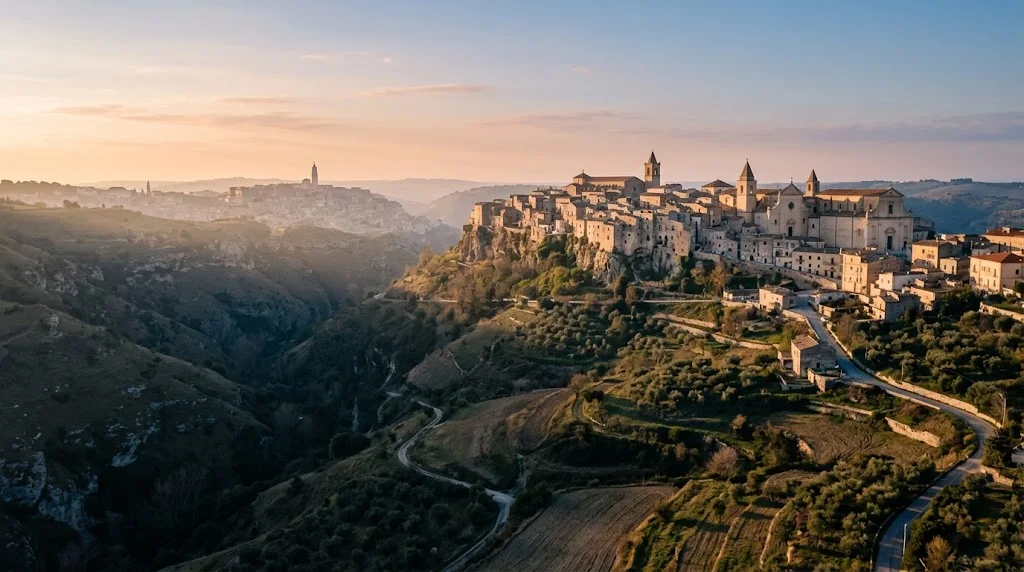
Sicily’s most internationally recognized towns, precisely the ones with the strongest tourism infrastructure, cultural depth and existing foreign buyer interest, had historically sat just above the old 20,000-population eligibility cap, excluding them from the 7% flat tax regime despite otherwise fitting the profile of towns that attract exactly this kind of relocating retiree. The 2026 increase to 30,000 changed that for several towns simultaneously, and the four covered here represent a genuinely useful cross-section of what became newly available, spanning Sicily’s Baroque southeast, its western hilltop character, and its northern coastal gateway towns.
Noto: Baroque Grandeur in the Southeast
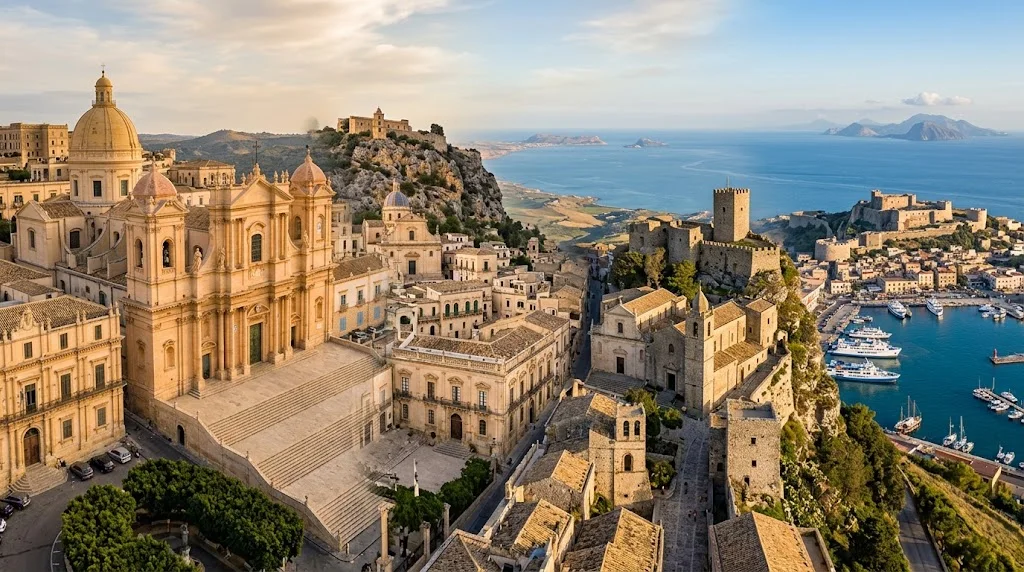
Noto, celebrated as one of Italy’s finest examples of Sicilian Baroque architecture and a UNESCO World Heritage town, offers genuine cultural depth alongside its newly eligible flat tax status. The town’s honey-colored stone architecture and well-preserved historic center have long attracted international visitors, and its inclusion in the expanded eligible list gives retirees a rare combination: significant cultural prestige alongside meaningful tax efficiency, a pairing that’s genuinely uncommon among the regime’s eligible towns generally.
Scicli: The Quieter Val di Noto Gem
Scicli, part of the same Val di Noto UNESCO World Heritage designation as Noto and neighboring Modica and Ragusa, offers a somewhat quieter, less internationally famous alternative within the same broader architectural and cultural region. Property prices here have historically run below Noto’s more internationally recognized market, offering a genuine value alternative for retirees drawn to the same Baroque architectural tradition without Noto’s comparatively higher profile-driven premium.
Erice: Hilltop Character on the Western Coast
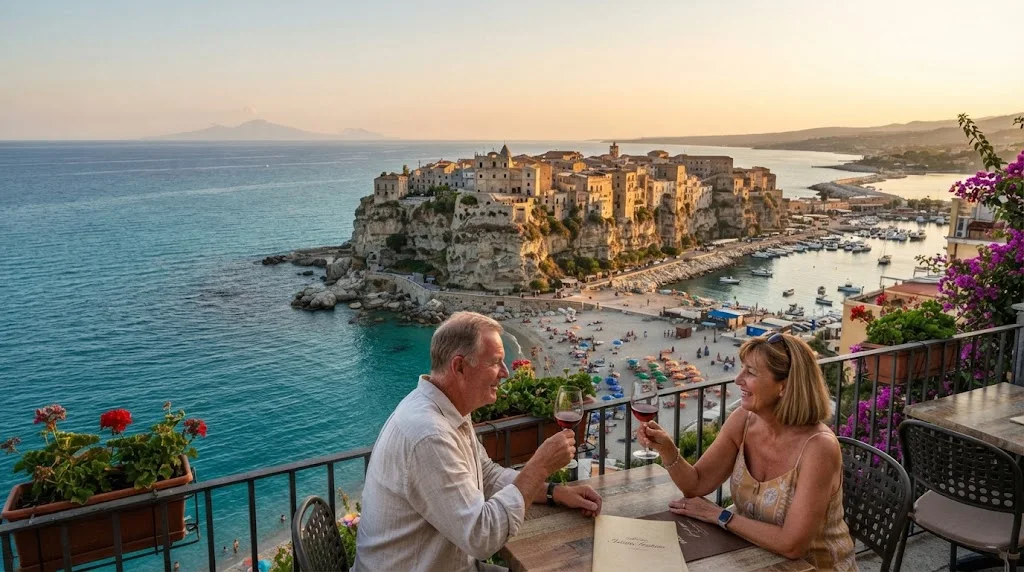
Erice, perched dramatically on a mountaintop above Trapani on Sicily’s western coast, offers a genuinely different character from the southeastern Baroque towns, medieval architecture, cooler hilltop temperatures even in Sicily’s hot summers, and sweeping views toward the coast and, on clear days, Tunisia. Its newly eligible status adds meaningful tax efficiency to a town that already carried strong appeal for retirees specifically drawn to a cooler, more elevated Sicilian lifestyle. The town’s cable car connection down to Trapani also gives residents genuinely practical access to coastal amenities and transport links without sacrificing the elevated, cooler living conditions that make Erice distinctive in the first place.
Milazzo: Coastal Gateway to the Aeolian Islands
Milazzo, on Sicily’s northeastern coast, functions as the main ferry gateway to the Aeolian Islands, giving it genuine practical appeal for retirees who want coastal Sicilian living with easy access to island excursions without living on a smaller island full-time themselves. Its newly eligible status makes it a genuinely distinctive option among the expanded list, combining port-town practicality with the flat tax benefit.
Side-by-Side Comparison
| Town | Character | Best Suited To |
|---|---|---|
| Noto | Grand Baroque architecture, strong cultural profile | Retirees prioritizing cultural depth and prestige |
| Scicli | Quieter Baroque town, similar heritage to Noto | Value-conscious retirees wanting the same architectural tradition |
| Erice | Hilltop medieval town, cooler climate | Retirees prioritizing climate and dramatic scenery |
| Milazzo | Coastal port town, Aeolian Islands gateway | Retirees wanting easy island access without full island living |
This spread illustrates just how much genuine variety exists within a single expanded eligibility list, four towns sharing the same 7% tax benefit while offering fundamentally different day-to-day living experiences.
Healthcare Access Across These Towns
Healthcare access varies by specific town’s proximity to Sicily’s larger cities: Milazzo sits reasonably close to Messina‘s hospital facilities, while Noto and Scicli are somewhat further from Syracuse and Ragusa’s respective facilities, and Erice sits a manageable distance from Trapani. None of these towns offer major specialist hospital facilities directly on-site, so realistic travel time to the nearest larger city’s healthcare infrastructure is worth factoring into any decision among them specifically. This pattern mirrors the broader Southern Italy healthcare distribution documented in national outcomes data, worth weighing alongside each town’s specific cultural and lifestyle appeal.
Verifying Current Eligibility Before Committing
As with any town relying on the 2026 population threshold expansion, confirm current eligible status directly against official sources before finalizing a relocation plan, since population figures and the official eligible list can be updated and should be checked at the point of actual application rather than assumed based on this or any other secondary summary. This verification step matters especially for towns whose population sits closer to the 30,000 threshold, where relatively modest demographic shifts over a few years could plausibly affect future eligibility status. It’s also worth checking whether any of these four towns run additional local incentive programs on top of the national 7% regime, since some southern Italian comuni layer their own supplementary offers for new residents.
Read Also: IRPEF Rates in Italy 2026: What Expats Actually Pay After Deductions and Surtaxes
Frequently Asked Questions
Were Noto, Scicli, Erice and Milazzo eligible for the 7% flat tax before 2026?
No, these towns became newly eligible following the April 2026 population threshold increase from 20,000 to 30,000 residents, having previously exceeded the older, narrower cap.
Which of these towns offers the best value for property prices?
Scicli generally offers lower property prices than Noto despite sharing similar Val di Noto Baroque architectural heritage, making it a genuine value alternative within the same cultural tradition.
Is Erice a good fit for retirees who dislike Sicily’s summer heat?
Yes, its elevated hilltop position offers meaningfully cooler temperatures than coastal or lowland Sicilian towns, a genuine practical advantage for heat-sensitive retirees.
Choosing Among Sicily’s Newly Eligible Towns
Each of these four towns offers a genuinely distinct character within the same overall tax advantage, architectural grandeur in Noto, quieter value in Scicli, elevated coolness in Erice, coastal practicality in Milazzo. Current eligible-town status should be verified against the text of Law 34/2026, published in Gazzetta Ufficiale, Italy’s official gazette, and current tax election procedures are available through the Agenzia delle Entrate, Italy’s tax authority. Visiting each town in person before committing, rather than deciding purely from photographs and descriptions, remains genuinely valuable given how meaningfully their day-to-day character differs despite sharing the same underlying tax benefit.
%%SSILMASK15%%