Coastal vs Hill Towns in Italy: Which Lifestyle Actually Suits Retirees
Table of Contents
- Climate: A Real, Not Just Aesthetic, Difference
- Mobility and Daily Practicality
- Healthcare Access
- Community and Social Life
- Cost Differences
- Driving and Transport Considerations
- A Middle Path: Hill Towns Near the Coast
- FAQs
- Are hill towns harder to navigate as you get older?
- Do coastal towns have better healthcare access than hill towns?
- Is it cheaper to live in a hill town or a coastal town?
- Can I get the benefits of both coastal and hill living?
- A Middle Path: Hill Towns Near the Coast
- Choosing Based on Your Actual Long-Term Needs
Both coastal and hill town living get romanticized heavily in Italy relocation content, and both genuinely deserve some of that romance. What’s less commonly addressed is which one actually suits a specific retiree’s real daily needs, mobility, healthcare proximity, and social preferences, since the honest answer depends far more on individual circumstances than either lifestyle’s marketing suggests.
Climate: A Real, Not Just Aesthetic, Difference
Coastal towns generally offer more moderate year-round temperatures, tempered by sea proximity, though summer heat and humidity can be genuinely intense in peak months, particularly in the South. Hill towns, especially at higher elevations, often see cooler summers, a real relief during Italy’s hottest months, but colder, sometimes genuinely harsh winters, particularly in central and northern hill regions. Neither climate is objectively better; the right fit depends on which extreme you’re more willing to adapt to. Regional climate data compiled by Istat, Italy’s national statistics agency, can help ground this comparison in actual seasonal averages rather than general impressions from a single visit.
Mobility and Daily Practicality
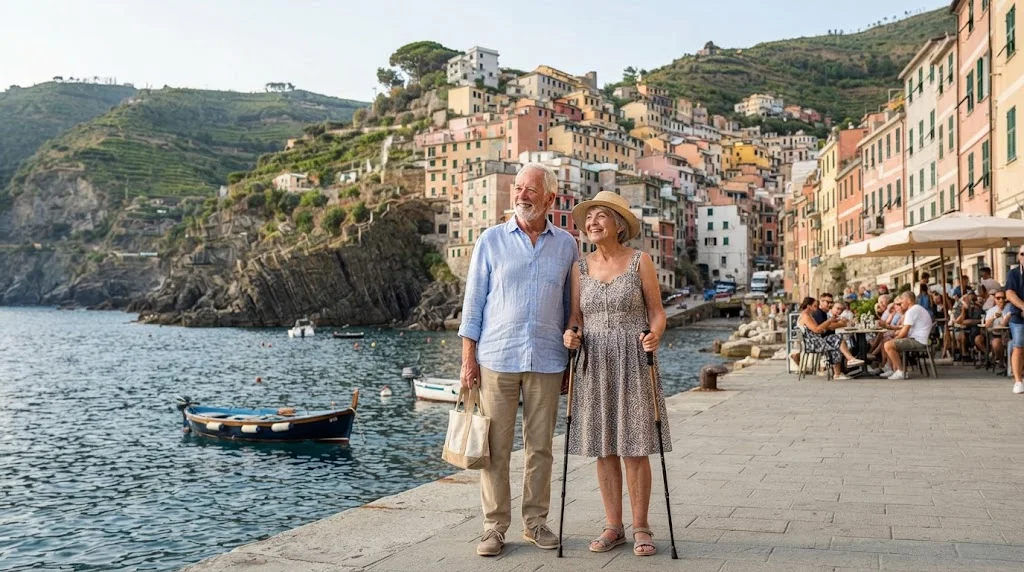
This is where the romantic hill-town image most often collides with retirement practicality. Many of Italy’s most picturesque hill towns are built on genuinely steep terrain, with narrow, stepped streets that become a real mobility challenge as physical needs change over time. Coastal towns, particularly those with flatter town centers, generally offer easier day-to-day mobility, an important consideration for retirees planning to age in place rather than relocate again as physical needs evolve.
Healthcare Access
| Coastal Towns | Hill Towns | |
|---|---|---|
| Typical hospital proximity | Often closer to larger coastal cities with hospital facilities | Can involve longer travel to reach major hospitals, particularly in remote hill regions |
| Emergency response | Generally faster given denser road networks near the coast | Can be slower in genuinely remote hill locations |
This isn’t a universal rule, some hill towns sit close to major regional hospitals, and some coastal areas are genuinely remote, but as a general pattern, coastal proximity tends to correlate with faster access to comprehensive healthcare facilities, worth weighing seriously for retirees with existing health conditions. National healthcare outcomes data, published by AGENAS, Italy’s national agency for regional health services, is worth cross-referencing against any specific town’s actual distance to the nearest strong-performing hospital, since neither coastal nor hill positioning alone guarantees quality care access.
Community and Social Life
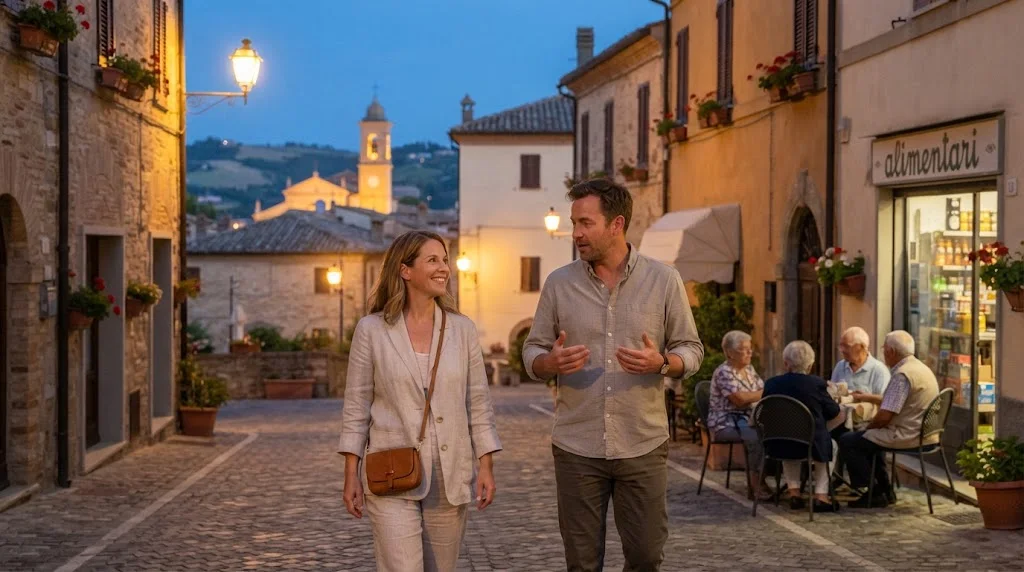
Coastal towns, particularly popular ones, often have larger, more visible expat and international communities, along with more restaurants, services and social infrastructure operating year-round, though this comes with more seasonal tourist intensity during summer months. Hill towns tend toward smaller, tighter-knit local communities, genuine integration opportunities for those willing to invest in language and local relationships, but potentially more isolating for retirees who specifically want an active, larger social scene without building it from scratch.
Cost Differences
Coastal towns with strong tourism appeal generally command real price premiums over comparable hill towns, sometimes substantially so for the most sought-after coastal destinations. Hill towns, particularly those without major tourist draw, often represent genuinely better value for the same budget, more space, lower property prices, though this value proposition needs to be weighed against the mobility and healthcare access trade-offs discussed above.
Driving and Transport Considerations
Many hill towns have limited or no public transport connecting them to larger towns and services, making a car genuinely necessary, and driving on winding mountain roads carries its own consideration for retirees whose driving comfort or ability might change over time. Coastal towns, particularly those along main rail lines, often offer better public transport connectivity, a meaningful factor for retirees who’d prefer not to depend entirely on driving as they age.
Read Also: Italy’s Superbonus in 2026: What’s Left of the Renovation Incentive
A Middle Path: Hill Towns Near the Coast
Some of Italy’s most appealing options split the difference: hill towns located a short drive from the coast, offering hill-town character and often lower costs, while remaining within reasonable reach of coastal amenities, healthcare facilities, and transport connections. This middle path is worth considering seriously for retirees drawn to hill-town aesthetics but wary of the full mobility and access trade-offs of a genuinely remote hill location.
FAQs
Are hill towns harder to navigate as you get older?
Often yes, many hill towns feature steep, narrow, stepped streets that become genuinely more challenging with reduced mobility, worth weighing seriously for long-term retirement planning rather than only current physical capability.
Do coastal towns have better healthcare access than hill towns?
As a general pattern, coastal areas tend to sit closer to major hospital facilities, though this varies by specific location and isn’t a universal rule across every coastal versus hill comparison.
Is it cheaper to live in a hill town or a coastal town?
Hill towns, particularly those without significant tourism, generally offer better value than comparable coastal towns, especially popular coastal destinations, though the gap varies considerably by specific location.
Can I get the benefits of both coastal and hill living?
Hill towns located a short drive from the coast offer a genuine middle path, combining hill-town character and value with reasonable access to coastal amenities and healthcare.
A Middle Path: Hill Towns Near the Coast
Some of Italy’s most appealing options split the difference: hill towns located a short drive from the coast, offering hill-town character and often lower costs, while remaining within reasonable reach of coastal amenities, healthcare facilities, and transport connections. This middle path is worth considering seriously for retirees drawn to hill-town aesthetics but wary of the full mobility and access trade-offs of a genuinely remote hill location. Many such towns exist across Tuscany, Le Marche, and inland Puglia specifically, offering a genuinely practical compromise that neither pure coastal nor pure remote-hill living provides on its own.
Choosing Based on Your Actual Long-Term Needs
Rather than choosing purely on aesthetic appeal, honestly assess your own mobility expectations over the coming decade, your healthcare needs, and how much you want an active, larger social scene versus quieter, deeper local integration. Both lifestyles offer genuine, well-documented rewards; the right one depends on which trade-offs actually fit your specific retirement plans.