
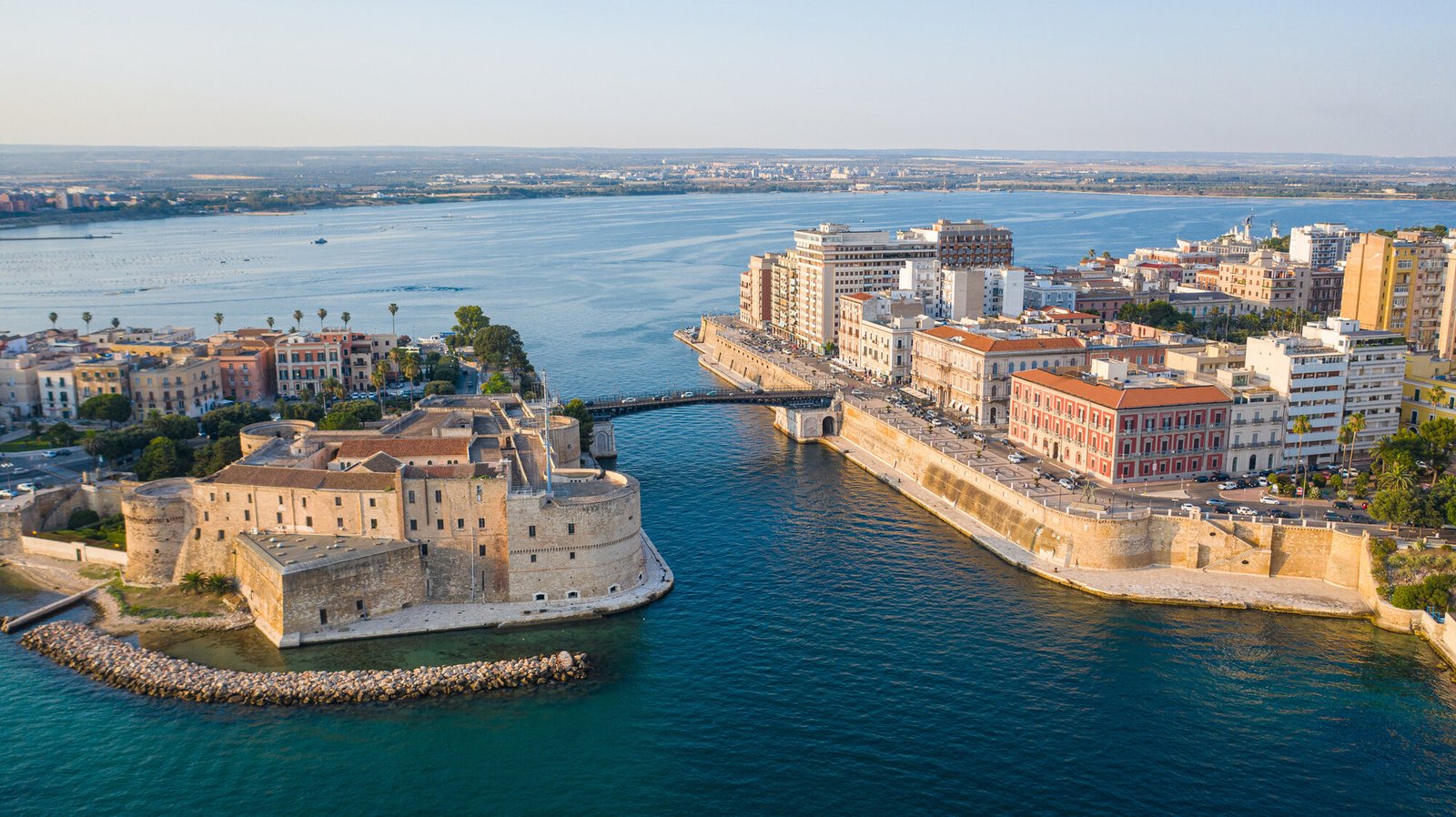
Puglia · Taranto · Italy
Taranto
Coastal city in Puglia known for its rich history, cultural attractions, outdoor activities, and local culinary delights.
At a glance
About Taranto
Taranto, a coastal city in Puglia, presents expats with an enticing mix of history, cultural richness, and a more relaxed lifestyle. It is famous for the National Archaeological Museum, which displays artifacts from its extensive Greek and Roman heritage, alongside the remarkable Aragonese Castle. With its close proximity to beautiful beaches and the Adriatic Sea, residents can enjoy a lifestyle focused on outdoor pursuits such as sailing and snorkeling. Food lovers will delight in the local fare, especially the renowned panzerotti and a wide variety of fresh seafood, rooted in the region’s agricultural practices.
Yet, newcomers may encounter some challenges. The local healthcare system has garnered mixed reviews, prompting expats to conduct thorough research. Moreover, a language barrier exists since English is not commonly spoken, which may complicate everyday interactions. The climate can be hot and humid, possibly requiring some adjustments. In summary, Taranto offers a distinctive yet intricate lifestyle for those contemplating a move.
✓ Pros for expats
– Rich cultural and historical backdrop to discover and enjoy.
– Mild Mediterranean climate with warm summers and cool winters.
– Strong community offering integration opportunities for newcomers.
– Affordable cost of living compared to larger Italian cities.
– Proximity to beautiful beaches and stunning coastal views.
– Local markets offer fresh produce and authentic Italian dishes.
– Healthcare services available, though quality can vary by facility.
– Reasonable public transportation options for local travel.
– Air quality is generally acceptable for outdoor activities.
– Quiet town life with less tourist congestion and noise.
! Things to consider
– Healthcare quality can be inconsistent across facilities.
– Public transportation options may be limited outside peak hours.
– Job opportunities may be fewer than in larger cities.
– Internet speeds could be frustratingly slow for some.
– Local job market has a somewhat higher unemployment rate.
– Educational institutions may not meet all international standards.
– Cultural events might be less frequent than in tourist towns.
– Air quality rating may be borderline acceptable for sensitive individuals.
– Infrastructure development could benefit from improvement and investment.
– Limited nightlife options for those seeking more vibrant entertainment.
Where is Taranto
Getting there
Taranto is reachable via major roads, with links to the SS7 and A14 highways. Public transport consists of two nearby train stations, providing moderate connectivity, although one station’s rating indicates limited service. The closest airports, Brindisi and Bari, offer regional and international flight options.
Housing & cost of living
Estimated cost of an 80 m² home: €68,160
Housing availability: High
Cost of living
Taranto presents a reasonably affordable lifestyle for expats and investors, thanks to a lower cost of living compared to larger Italian cities. Housing options are accessible, with fair rental prices for apartments and homes contributing to overall affordability. Daily expenses, including groceries and dining, remain budget-friendly, though rising utility and transportation costs should be taken into account. The local economic climate reflects stable employment prospects despite slightly elevated unemployment rates compared to the national average. Overall, Taranto is considered a manageable location for those seeking a balance of cultural experience and financial practicality.
Climate & weather
Exceptional (Top 10%)
Very Low (Bottom 10%)
Very Low (Bottom 10%)
Exceptional (Top 10%)
Taranto, Italy, enjoys a climate that supports a variety of outdoor activities throughout the year, appreciated by expats and retirees alike. The city experiences mild winters with negligible snowfall, making it an ideal location for those who prefer to avoid harsh winter conditions. Summers in Taranto are warm and inviting, allowing for plenty of opportunities to explore local beaches and historical sites under sunny skies. The moderate annual precipitation ensures that the region remains lush and vibrant without the inconvenience of frequent rainfall. Overall, Taranto provides a comfortable climate conducive to a relaxed, outdoor-centric lifestyle in a culturally rich setting.
Air quality & environment
Air quality rating: ★★★★★
In Taranto, Italy, the air quality generally presents a combination of commendable and acceptable conditions. Key pollutants like nitrogen dioxide and sulphur dioxide are consistently maintained at levels deemed good, indicating effective local measures to reduce emissions from industrial and traffic sources. Particulate matter, a common concern in urban environments, shows varied measurements. The larger particles (PM10) are found in concentrations that signify a healthy air status with minimal risk for respiratory issues. In contrast, finer particles (PM2.5) and ozone levels remain at moderate levels, necessitating occasional caution for sensitive individuals. Overall, Taranto's air quality supports a comfortable lifestyle for both residents and visitors.
Healthcare & safety
Road accidents: 17.0 per 10k inhabitants.
ASL Taranto oversees the Taranto province, which includes Taranto city, Martina Franca, Manduria, the Murge, and the Ionian coast. Its composite score is 47/100, which is below the median. The profile is well-balanced. Taranto’s specific public health challenges related to the ILVA steel plant have attracted national attention; the AULSS data falls in the mid-range of Puglia and does not exhibit acute deviations from the regional norm.
Internet & connectivity
Transport & proximity
✈️ Airports
| Airport | Drive | Score |
|---|---|---|
| Papola Casale (Brindisi) | 38 min | 4 |
| Karol Wojtyla (Bari) | 54 min | 7 |
| Lamezia Terme (Lamezia) | 128 min | 5 |
🚂 Rail stations
| Station | Drive | Score |
|---|---|---|
| Taranto | 14 min | 7 |
| Grottaglie | 16 min | 5 |
| Taranto Galese | 9 min | 4 |
What's nearby
Life in Taranto
Neighbourhoods
– **Centro Storico (Borgo Antico)**: The historical center is celebrated for its ancient architecture and narrow lanes, offering a glimpse into the city’s rich past and serving as a cultural hub.
– **Tamburi – Lido Azzurro**: Known for its nearness to industrial zones, this neighborhood faces environmental challenges but plays a crucial role in the local economy.
– **Talsano-Tramontone**: A predominantly residential area to the south, providing various housing options and local services.
– **Tre Carrare – Battisti**: Defined by post-war architecture, this area features a blend of residential and commercial spaces, creating a vibrant urban atmosphere.
– **Paolo VI**: Situated on the outskirts, this neighborhood includes modern housing developments and is linked to major transport routes.
– **Lama Carelli**: Similar to Talsano, it offers residential accommodations and is located on the periphery, providing quieter living conditions.
– **Montegranaro**: This area merges residential living with some commercial facilities, offering community-oriented amenities.
– **Solito-Corvisea**: Centrally located, providing easy access to various parts of the city along with a diverse array of amenities for residents.
– **Porta Napoli**: An important gateway to the city, recognized for its medieval city gate and significance in local trade routes.
Local cuisine
Taranto, located in the Puglia region of Italy, showcases a lively culinary scene primarily influenced by its coastal setting and historical trade routes. The local cuisine is distinguished by its focus on seafood, especially shellfish and fresh fish. Dishes like raw mussels on the half shell, soupy pasta with mussels and beans, and spaghetti with sea urchins highlight typical preparation methods that emphasize freshness and simplicity. The region is particularly celebrated for its unique dishes such as panzerotti, deep-fried pizza pockets, and various traditional breads. In addition to seafood, local specialties include burrata, stracciatella, and distinctive vegetable varieties like lampascioni and caroselli. The dining scene features a blend of local trattorias and a growing international presence, offering options that range from casual seafood spots to diverse international cuisine reflecting its multicultural population. Notably, Taranto is home to the Michelin-starred restaurant Gatto Rosso, showcasing the town’s dedication to exceptional dining experiences. Overall, the culinary landscape in Taranto provides a robust representation of Puglia’s rich gastronomic heritage, complemented by modern international influences.
Where to shop
The shopping scene offers a variety of options, including contemporary shopping malls and factory outlets, catering to diverse consumer tastes. Farmers markets provide fresh local produce, while specialty shops and boutiques offer unique gifts and local crafts. Flea markets add a traditional shopping experience, appealing to those in search of antiques and second-hand items. Overall, shopping experiences blend convenience with cultural authenticity, making them suitable for both expats and retirees.
Green areas & parks
Taranto offers various outdoor activities suitable for expats and retirees. Key areas include the Bosco delle Pianelle, known for the Hornbeam Trail and the Captain’s Tree walk. The Parco Naturale Regionale Terra delle Gravine features trails such as La Gravina di Laterza. These parks are perfect for hiking, providing a combination of natural beauty and established paths. The Foce del Fiume Chidro Nature Reserve and Riserve del Litorale Tarantino Orientale are additional important nature reserves. These locations offer a range of outdoor experiences, from leisurely strolls to more challenging hikes.
Education
People & tourism
Annual tourists (2023): 91,951