
Veneto · Verona · Italy
Verona
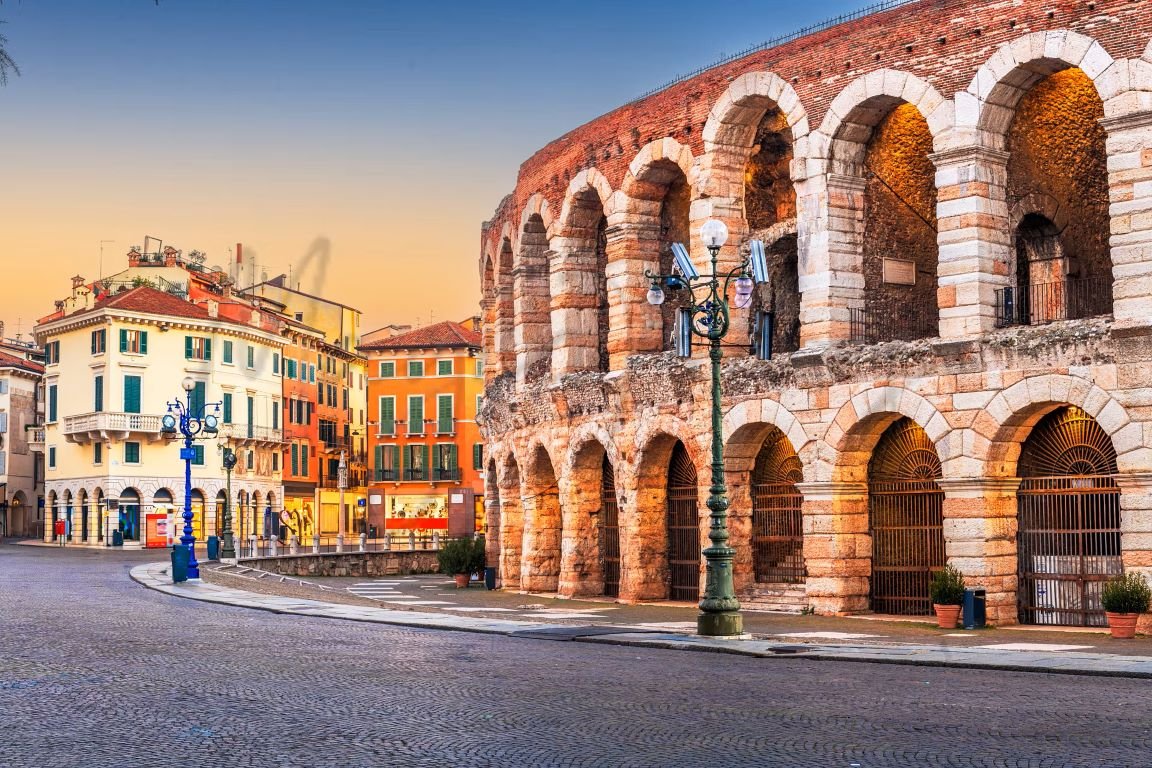
A historic city celebrated for its ancient architecture and vibrant culture, featuring performances in its Roman amphitheater. Known as the setting for Shakespeare's romantic tragedy, with a robust local economy bolstered by wine production.
At a glance
About Verona
Verona, renowned for its historical significance and romantic ambiance, is a top choice for visitors in the Veneto region. Nestled in northern Italy with origins tracing back to Roman civilization, the city showcases well-preserved ancient landmarks such as the iconic Verona Arena, an amphitheater that continues to host performances to this day. Additionally, Verona is celebrated as the backdrop for Shakespeare’s timeless play, “Romeo and Juliet.”
On the economic front, Verona thrives through various industries and modern services. Situated in the Veneto region, the city’s prime location and excellent transport links make it easily reachable for both business and leisure travelers.
✓ Pros for expats
– Abundant cultural and historical heritage to discover every day.
– Excellent infrastructure ensures easy transportation and accessibility.
– High-quality healthcare services are available for residents and expats.
– Pleasant climate featuring warm summers and mild winters.
– Vibrant community offering integration opportunities for newcomers.
– Low unemployment rate contributes to economic stability and job availability.
– Strong tourist presence enriches local amenities and services.
– Quality educational institutions cater to various age groups.
– Good internet connectivity supports remote working and communication.
– Beautiful landscapes and nearby natural attractions for outdoor pursuits.
! Things to consider
– Air quality may be suboptimal for sensitive individuals.
– Tourist crowds can overwhelm locals and disrupt daily life.
– Healthcare services might be strained during peak tourist times.
– Traffic congestion can be a daily challenge for residents.
– The high cost of living can significantly strain retirement budgets.
– Limited job options exist for professions outside the tourism sector.
– Language barriers may impede full integration for newcomers.
– Seasonal weather changes can impact outdoor lifestyle plans.
– Cultural events can feel crowded, diminishing personal enjoyment.
– Public services may operate slower during busy tourist periods.
Where is Verona
Getting there
Verona boasts excellent connectivity, with Valerio Catullo Airport offering both regional and international flights. Major highways enhance access to nearby cities, broadening travel options. The town’s railway stations provide diverse connectivity, supported by a high infrastructure rating that ensures efficient travel to surrounding regions.
Getting around
Inside Verona, the public transport system operates efficiently, with buses and taxis readily accessible. Bicycle rentals offer an eco-friendly mode of transport, while the compact city layout makes walking an enjoyable and often preferred choice.
Housing & cost of living
Estimated cost of an 80 m² home: €219,280
Housing availability: High
Cost of living
Verona presents a balanced affordability profile, appealing to both expats and investors. The city enjoys a low unemployment rate and a strong economic rating, indicating a stable job market and opportunities for growth. Housing costs are reasonable, with monthly rents varying by location but generally more affordable compared to larger cities. Daily living expenses are manageable, especially for individuals with average incomes that exceed local costs. In summary, Verona is a financially viable option within Italy, promoting a comfortable lifestyle without excessive financial strain.
Climate & weather
Average (41st-50th percentile)
Below Average (31st-40th percentile)
Below Average (31st-40th percentile)
Somewhat High (61st-70th percentile)
Air quality & environment
Air quality rating: ★★★★★
In Verona, Italy, the air quality reflects a balanced urban environment. Levels of particulate matter and gaseous pollutants generally remain moderate, contributing to a favorable atmosphere for residents and visitors alike. Verona’s air profile shows fairly rated levels of both PM10 and PM2.5, indicating a relatively clean environment suitable for outdoor activities. The city also demonstrates good conditions regarding nitrogen dioxide and sulfur dioxide, which are typically linked to vehicular and industrial emissions. This makes Verona an appealing choice for those seeking a place with manageable environmental factors while enjoying urban living. Overall, the air quality in Verona supports a comfortable lifestyle, which is particularly important for expatriates and retirees considering relocation.
Healthcare & safety
Road accidents: 59.0 per 10k inhabitants.
ULSS 9 Scaligera encompasses Verona province , Verona city, the eastern shore of Lake Garda (Bardolino, Lazise, Malcesine, Peschiera), the Lessini hills, and the Valpolicella wine region. It has a composite score of 54/100, placing it in the top quartile nationally. The profile is well-balanced across various aspects. For residents along the Garda east shore in particular, ULSS 9 provides a significantly stronger healthcare network than the Lombard authorities just a few kilometers across the water; this consistency is reflected in the data.
Internet & connectivity
Transport & proximity
✈️ Airports
| Airport | Drive | Score |
|---|---|---|
| Valerio Catullo (Verona) | 19 min | 7 |
| Montichiari (Brescia) | 45 min | 3 |
| Orio al Serio (Bergamo) | 62 min | 7 |
🚂 Rail stations
| Station | Drive | Score |
|---|---|---|
| Verona Porta Nuova | 13 min | 9 |
| Verona Porta Vescovo | 10 min | 7 |
| San Martino Buon Albergo | 16 min | 7 |
What's nearby
Life in Verona
What to see & do
- Verona Arena: A remarkably preserved Roman amphitheater that hosts concerts and opera performances.
- Juliet’s House: A well-known tourist attraction linked to Shakespeare’s “Romeo and Juliet.”
- Piazza delle Erbe: A square surrounded by historic buildings and market stalls.
- Castelvecchio: A medieval castle that houses an art museum featuring impressive collections.
- Ponte Pietra: A charming Roman bridge offering breathtaking views of the city.
- Piazza dei Signori: A historical square famous for its statues and notable buildings.
- Giardino Giusti: Stunning gardens featuring well-kept lawns, statues, and fountains.
- Basilica of San Zeno Maggiore: A Romanesque church boasting impressive architecture and artworks.
- Teatro Romano: An ancient Roman theatre that continues to host performances.
- Arche Scaligere: Gothic tombs dedicated to the Scaliger family.
Neighbourhoods
– **Città antica:** This historic district within the city walls includes landmarks such as the Verona Arena and Piazza delle Erbe. It forms part of Verona’s acclaimed cultural heart.
– **Cittadella:** Located within the historic core, this neighborhood retains its original fortifications while integrating modern commercial developments.
– **San Zeno:** Renowned for the Basilica of San Zeno, this neighborhood is celebrated for its medieval architecture and historical importance.
– **Veronetta:** A university area, Veronetta houses various departments of the University of Verona, fostering a vibrant academic environment.
– **Borgo Trento:** Positioned near the first bend of the Adige River, this district is predominantly residential with convenient access to local healthcare facilities.
– **Valdonega:** Recognized for its proximity to green spaces, including the nearby hills, offering outdoor activities such as hiking and cycling.
– **Borgo Venezia:** A contemporary residential neighborhood that blends urban living with easy access to public parks and transport links.
– **Porto San Pancrazio:** This area features a mix of industrial and residential zones, marked by its transformation in recent years.
– **Borgo Roma:** An industrial zone hosting numerous businesses while providing residential amenities and good public transit connections.
– **Santa Lucia:** Mainly residential, this area is known for its community spaces and local services.
– **Borgo Milano:** Combines residential and commercial properties, with access to shopping centers and eateries.
– **Golosine:** Located near Verona’s main train station, this district mixes residential areas with commercial activities.
– **Ponte Crencano:** A lively community with recreational facilities and parks, offering opportunities for sports and leisure activities.
– **Avesa:** A former rural area known for its charming village atmosphere and scenic walking paths.
– **Quinto:** This semi-rural neighborhood features historical villas and local vineyards, enhancing its agrarian appeal.
– **Santa Maria in Stelle:** Known for its archaeological sites and picturesque rural landscape, providing a serene environment.
– **Mizzole:** Offers rural landscapes with vineyards and historic estates, reflecting Verona’s agricultural heritage.
– **Montorio:** Famous for its castle ruins and surrounding nature reserves, ideal for outdoor adventures.
– **San Michele:** A suburban area recognized for its educational institutions and community facilities.
– **Cadidavid:** Presents a suburban lifestyle with a blend of residential options and local commercial establishments.
– **San Massimo:** Largely residential, featuring local parks and community-focused amenities.
– **Parona:** Located along the Adige River, known for its wineries and scenic views.
– **Quinzano:** A hilly suburb that offers panoramic vistas and is appreciated for its tranquil residential setting.
Local cuisine
Verona’s food scene represents a rich blend of traditional and modern influences, characteristic of the Veneto region. Signature dishes include Amarone risotto, a sumptuous rice dish infused with local Amarone wine, and potato gnocchi, commonly served with a variety of sauces. The famous pastissada de caval, a horse meat stew, highlights the region’s rustic offerings, while tortellini di Valeggio showcases the area’s pasta-making expertise. Additionally, sweets like pandoro mark Verona’s celebrated confectionery tradition. The dining scene features a range of options, from rustic trattorias offering traditional dishes to international restaurants showcasing diverse cuisines, reflecting the town’s global appeal. Verona is also home to several Michelin-starred restaurants, including Casa Perbellini, known for innovative takes on classic dishes, and Locanda 4 Cuochi, which emphasizes seasonal and local ingredients. Overall, the culinary landscape is defined by a dedication to quality and traditional techniques, alongside a growing international presence.
Where to shop
The shopping environment offers a variety of categories to meet diverse needs. Supermarkets cater to essential grocery shopping, while shopping centers feature numerous fashion and electronics stores. Upscale and mid-range boutiques are abundant, particularly in pedestrian areas. Daily markets provide local produce, clothing, and crafts, with weekend markets spotlighting antiques and handmade products. Shopping arcades further enhance the experience by merging retail with leisure spaces, including cafes. This variety guarantees a wide range of shopping opportunities for both locals and expatriates.
Green areas & parks
Verona provides a range of outdoor activities suitable for expats and retirees. Significant green spaces include Giardino Giusti, famous for its classical Italian garden design, and the Parco delle Mura, a public park featuring walking paths along the historic city walls. Hiking enthusiasts can enjoy trails like the Torricelle Walk, which offers sweeping views of the city, as well as paths in the Lessinia Regional Natural Park, known for its stunning limestone formations. Moreover, the Lungadige trail along the Adige River is favored for walking and cycling.
For further outdoor pursuits, the area surrounding Lake Garda is easily accessible, offering additional activities such as sailing and lake tours, beautifully blending Verona’s rich cultural heritage with its natural scenery.