Family Reunification Visa Italy: Bringing a Non-EU Spouse or Child to Join You
Table of Contents
- What Is Family Reunification, and Who Can Sponsor It?
- The Two-Stage Process: Nulla Osta, Then Visa
- Income and Housing Requirements for the Sponsor
- Documents You’ll Need
- Realistic Timelines
- Common Reasons Family Reunification Gets Delayed
- Frequently Asked Questions
- Can I apply for family reunification and my own visa at the same time?
- Does family reunification apply to unmarried partners?
- How long does the whole process typically take?
- What income level do I need to sponsor a family member?
- Planning the Sequence
Once you’re legally settled in Italy, bringing a spouse or child to join you runs through a completely separate process from the visa that got you there. It’s called family reunification (ricongiungimento familiare), and it’s one of the more document-heavy, sequential processes in Italian immigration law. Understanding the order of steps matters just as much as the paperwork itself.
What Is Family Reunification, and Who Can Sponsor It?
Family reunification allows a non-EU citizen already legally resident in Italy, holding a valid residence permit, to bring specific family members to join them. The framework is set out in Article 29 of the Consolidated Immigration Act (Legislative Decree 286/1998), available in full through Normattiva, Italy’s official legislative database. Procedural guidance for sponsors is also published by the Ministry of Foreign Affairs.
Eligible family members generally include a spouse, minor children (including adopted children), and, in more limited circumstances, dependent adult children or parents. The sponsor, the person already in Italy, must hold a residence permit valid for at least one year and meet income and housing requirements before the process can begin.
The Two-Stage Process: Nulla Osta, Then Visa
Family reunification works in a specific sequence, and skipping ahead isn’t possible.
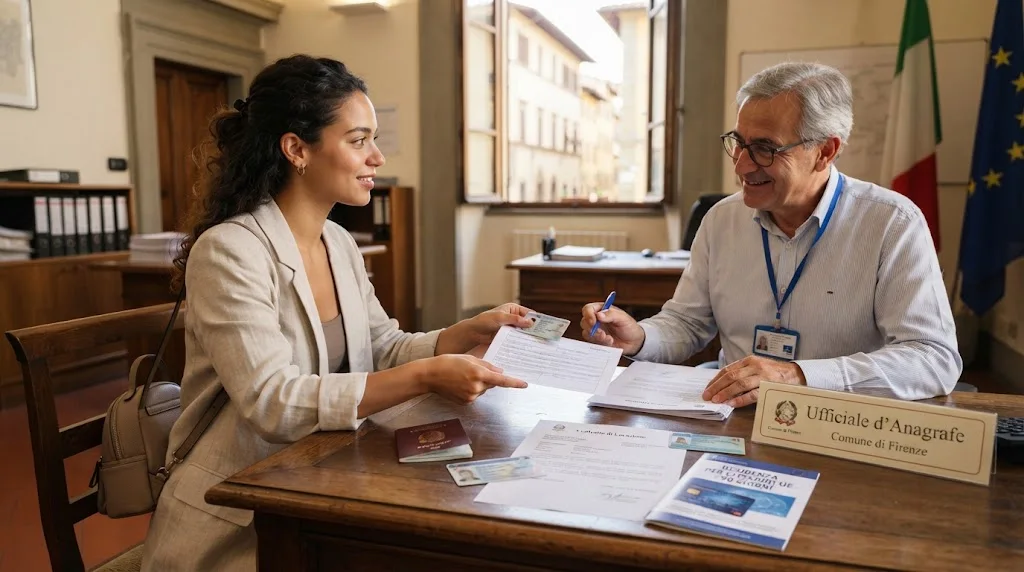
- The sponsor applies for a Nulla Osta (formal clearance) through the Sportello Unico per l’Immigrazione, the immigration desk at the local Prefettura, demonstrating sufficient income and suitable housing for the family member joining them.
- Once granted, the Nulla Osta is sent to the Italian consulate covering the family member’s current country of residence.
- The family member applies for their own entry visa at that consulate, using the Nulla Osta as the basis for the application.
- After entering Italy, the family member applies for their own permesso di soggiorno within eight working days, the same requirement that applies to any long-stay visa holder.
Because the visa application only starts after the Nulla Osta is granted, not alongside it, the whole process is sequential rather than parallel. Budget significantly more time for family reunification than for your own original visa application.
Income and Housing Requirements for the Sponsor
The sponsor needs to demonstrate an annual income sufficient to support the joining family member, generally benchmarked against Italy’s social allowance (assegno sociale) figures, with the exact threshold scaling up depending on how many family members are joining. Housing also needs to meet minimum size and habitability standards set by local health authority (ASL) requirements, not simply any registered lease.
Documents You’ll Need
| Document | Notes |
|---|---|
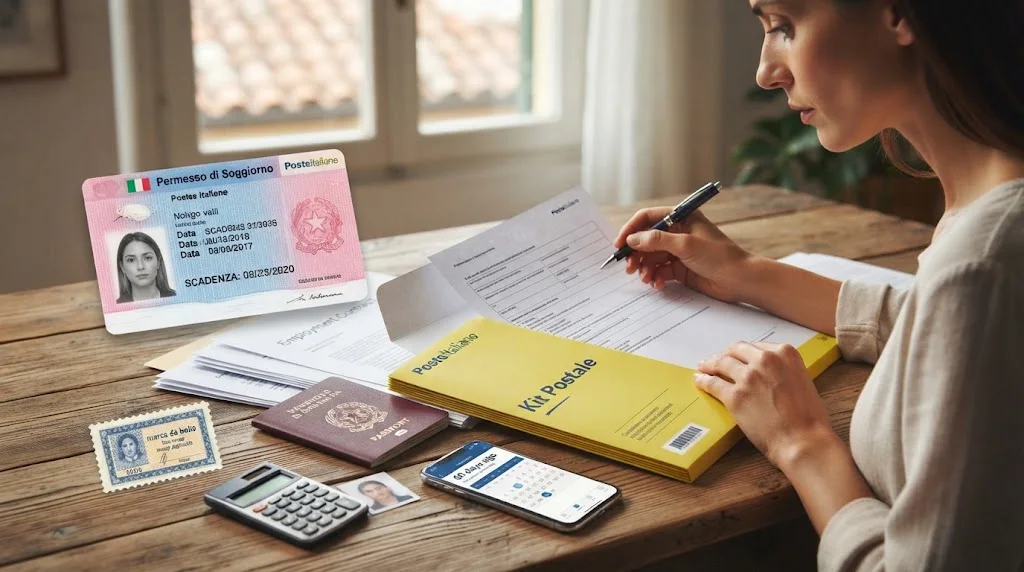
| Sponsor’s valid residence permit | Must have at least one year of validity |
| Proof of sponsor’s income | Pay slips, tax returns, or equivalent, meeting the applicable threshold |
| Proof of suitable housing | Meeting ASL habitability standards, not just a signed lease |
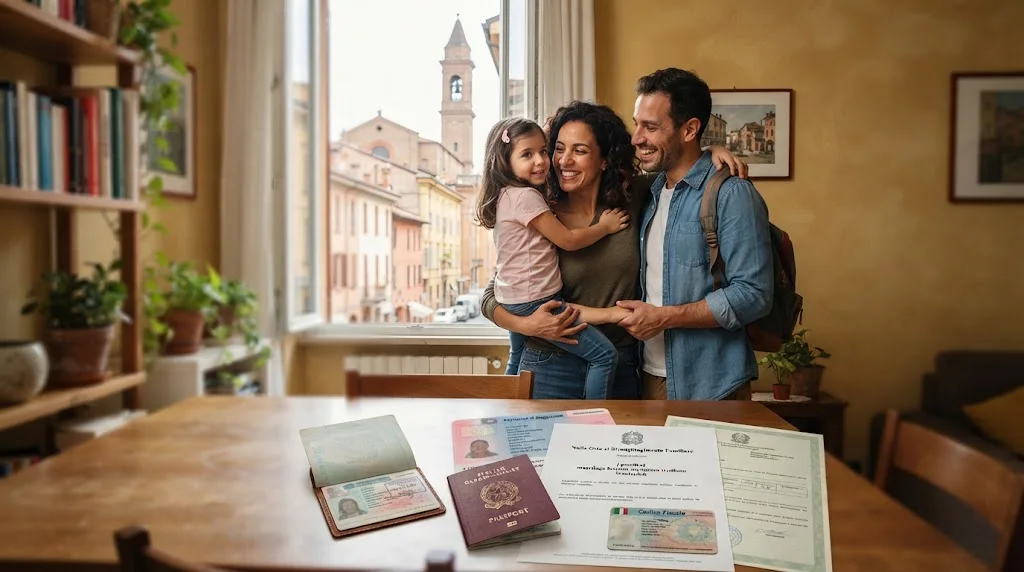
| Marriage certificate | Apostilled and translated into Italian, for spouse reunification |
| Children’s birth certificates | Apostilled and translated, for child reunification |
| Valid passports | For each family member joining |
Realistic Timelines
The Nulla Osta stage alone commonly takes several months, and consulate processing for the family member’s subsequent visa application adds further time on top of that. Applicants should generally expect the full process, from the sponsor’s initial application through the family member’s arrival in Italy, to run anywhere from several months to closer to a year, depending on the Prefettura’s caseload and the consulate handling the family member’s visa.
Common Reasons Family Reunification Gets Delayed
- Insufficient documented income, particularly for sponsors who are self-employed and lack straightforward pay slips.
- Housing that doesn’t meet ASL habitability standards, even if it’s a genuine, registered residence.
- Missing apostilles or certified translations on marriage or birth certificates.
- Applying before the sponsor’s own residence permit has the required minimum validity remaining.
Read Also: Italian Tax Residency: The 183-Day Rule and Center of Vital Interests Explained
Frequently Asked Questions
Can I apply for family reunification and my own visa at the same time?
No. You generally need your own residence permit in place first, with at least one year of validity, before you can sponsor a family member’s reunification application.
Does family reunification apply to unmarried partners?
The framework primarily covers spouses, minor children and, in limited circumstances, dependent parents or adult children. Unmarried partners generally fall outside this specific process and should look into separate visa categories if applicable.
How long does the whole process typically take?
Commonly several months to around a year in total, covering the Nulla Osta stage, the family member’s consulate visa application, and their subsequent permesso di soggiorno application after arrival.
What income level do I need to sponsor a family member?
The threshold is generally tied to Italy’s annual social allowance figure and scales up with the number of family members joining. Confirm the current specific figure with your local Prefettura, since it’s periodically adjusted.
Planning the Sequence
The single most useful thing to understand about family reunification is that it’s genuinely sequential, not something you can shortcut by preparing everything in parallel. Secure your own residence permit and its required minimum validity first, confirm your income and housing meet the current thresholds before applying for the Nulla Osta, and build real time into your planning for the consulate stage that follows once clearance is granted.