
Italian Sagre Explained: How to Find and Enjoy Local Food Festivals
Table of Contents
- What a Sagra Actually Is
- The Economic and Social Role Sagre Play
- How Sagre Actually Work
- When Sagre Happen
- Finding Sagre Near You
- What to Expect as a First-Time Attendee
- Sagre as Genuine Cultural Integration
- Regional Specialties Worth Seeking Out
- Sagre as a Window Into Regional Government and Community Life
- Frequently Asked Questions
- Do I need to speak Italian to enjoy a sagra?
- Are sagre expensive to attend?
- When is sagra season in Italy?
- How do I find sagre happening near me?
- Making Sagre Part of Your Local Life
One of the genuine perks of settling in Italy, particularly outside the major tourist cities, is discovering just how many sagre run throughout the year in even the smallest towns. These local food festivals are one of the most authentic, least commercialized windows into regional Italian life available to residents, and most of them barely register on international tourist radar at all.
What a Sagra Actually Is
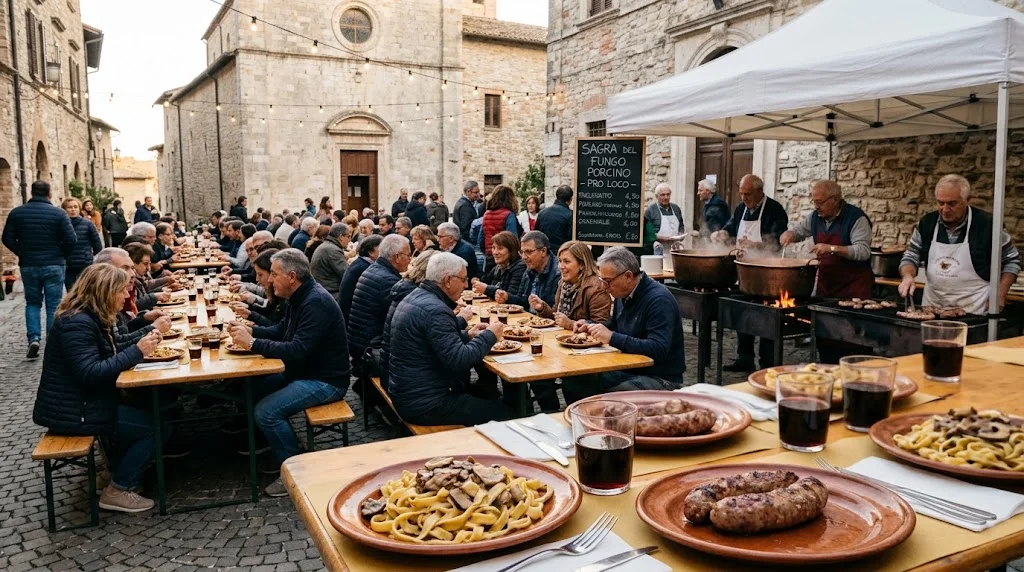
A sagra is a local festival, traditionally organized around a specific food item, a type of pasta, a regional dish, a particular vegetable or fruit in season, mushrooms, chestnuts, a specific cured meat, celebrated by an entire town, often centered on the local church or community association (pro loco). Unlike a formal food fair or a commercial event, sagre are typically volunteer-run community affairs, with proceeds often supporting the local church, sports club, or civic association organizing it. Many trace back decades, sometimes over a century, and continue largely unchanged in format even as the towns hosting them have modernized around them.
The Economic and Social Role Sagre Play
Beyond the food itself, sagre often function as a genuine economic lifeline for smaller towns, particularly in regions facing depopulation, drawing visitors from neighboring towns and, increasingly, curious residents and tourists from further afield. For many small comuni, the annual sagra calendar represents a meaningful share of local civic fundraising and community cohesion, which is part of why local governments and associations invest real effort into keeping these traditions running even as attendance patterns shift generationally.
How Sagre Actually Work
Most sagre involve long communal tables set up in a piazza or festival ground, simple paper-ticket ordering systems, and food cooked in large volume by local volunteers, often following recipes passed down through generations rather than a professional kitchen’s polished presentation. Prices are typically very affordable, reflecting the community, non-commercial nature of the event, and portions tend to be generous rather than precious.
When Sagre Happen
Sagre run throughout the year but cluster heavily around late summer and autumn, tied to harvest seasons, grape and wine festivals in September, chestnut and mushroom festivals through October and November, and truffle-focused events in regions known for them. Spring brings its own smaller wave, often centered on specific vegetables coming into season. Winter sagre are less common but do exist, particularly around specific regional Christmas or Carnival traditions.
Finding Sagre Near You
Sagre are overwhelmingly local, small-scale events, which means they’re not always well documented in English-language sources or major tourism sites. The most reliable methods for finding them: checking local Comune notice boards and social media pages, asking neighbors or local shopkeepers directly (this remains one of the best sources), and following regional tourism board pages, which increasingly list sagre calendars alongside more conventional attractions. Local Italian-language event listing sites and regional newspapers also regularly publish sagra calendars, worth checking even with imperfect Italian, since dates and locations are usually clear enough from context.
What to Expect as a First-Time Attendee
- Cash is often preferred, and sometimes the only accepted payment method, particularly at smaller, more traditional sagre.
- Queuing systems can be informal; watching how locals navigate the ordering process before diving in yourself avoids confusion.
- Portions are generous and multiple dishes are common; pacing yourself across several small plates rather than one large order is the typical approach.
- Live music, dancing, and general community socializing are usually as much the point as the food itself.
Sagre as Genuine Cultural Integration
Beyond the food itself, sagre offer something genuinely valuable for new residents: an unforced, low-pressure setting to be around locals doing something purely social and communal, rather than a transactional tourist experience. Showing up regularly to a town’s sagre, over months and years, is one of the more organic ways expats report actually building local relationships and a sense of belonging, well beyond what purely transactional daily errands provide.
Regional Specialties Worth Seeking Out
Nearly every region has its own signature sagra traditions: truffle festivals in Umbria and parts of Tuscany, seafood-focused sagre along the Adriatic and Tyrrhenian coasts, porcini mushroom festivals across much of central and northern Italy in autumn, and countless hyper-local pasta-shape or regional-dish festivals that exist almost nowhere outside their specific town of origin. Part of the appeal is precisely that these events are so locally specific that no two regions’ sagra calendars look remotely alike.
Sagre as a Window Into Regional Government and Community Life
Many sagre are directly supported or co-organized by local Comune administrations as part of broader efforts to sustain small-town tourism and community identity, particularly in depopulating rural areas where these events represent a meaningful piece of the local economy and social calendar. Regional tourism boards increasingly publish official sagre calendars alongside more conventional attractions, and general information on regional cultural events and traditions is compiled by Ministero della Cultura, Italy’s Ministry of Culture, while local civic association activity is coordinated nationally through ANCI, the National Association of Italian Municipalities.
Read Also: Driving in Italy: License Conversion Rules by Home Country
Frequently Asked Questions
Do I need to speak Italian to enjoy a sagra?
Not fluently, though basic food vocabulary helps significantly with ordering. Most sagre are welcoming, informal community events where enthusiasm and a willingness to try local dishes matters more than language fluency.
Are sagre expensive to attend?
Generally no, they’re typically priced affordably given their non-commercial, community-run nature, making them one of the more budget-friendly ways to experience high-quality regional cooking.
When is sagra season in Italy?
They run year-round but cluster heavily in late summer through autumn, tied to harvest seasons for wine, chestnuts, mushrooms and truffles, with a smaller spring wave centered on seasonal vegetables.
How do I find sagre happening near me?
Local Comune notice boards, neighbors and shopkeepers, regional tourism board listings, and local Italian-language event sites are all reliable sources, since sagre are rarely well documented on major English-language tourism platforms.
Making Sagre Part of Your Local Life
Once you’re settled, keep an informal eye on your town’s and neighboring towns’ event calendars throughout late summer and autumn specifically, since this is when the density of sagre peaks. Attending even a handful over your first year is one of the more enjoyable, low-effort ways to genuinely understand the specific regional food culture of wherever you’ve chosen to live, well beyond what restaurant dining alone reveals.
%%SSILMASK17%%