
Inheriting Property in Italy: The Succession Process Foreign Heirs Face
Table of Contents
- What the Dichiarazione di Successione Actually Is
- Who Needs to File
- Required Documents
- Forced Heirship: Why the Will Doesn’t Always Control Everything
- Where the Process Commonly Stalls
- Inheritance Tax on the Property
- What Happens to Jointly Inherited Property
- Selling Inherited Property as a Foreign Heir
- Frequently Asked Questions
- How long do heirs have to file the succession declaration?
- Does a foreign will automatically control how Italian property is inherited?
- What happens if multiple heirs inherit the same property?
- Working With the Right Professionals From the Start
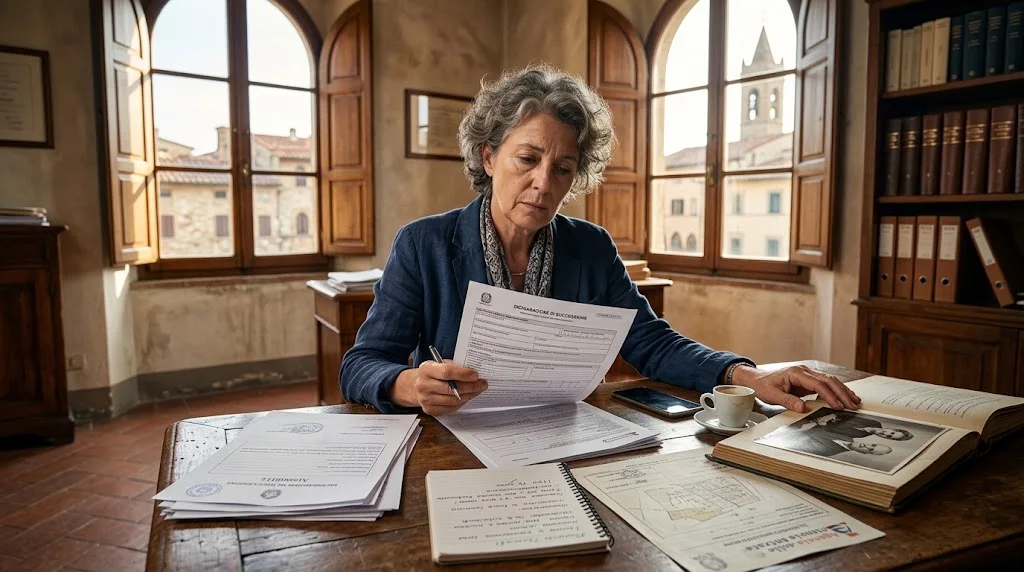
Inheriting property in Italy as a foreign heir involves a formal legal process, the dichiarazione di successione, that’s genuinely different from probate processes in the US, UK or other common law countries, and navigating it from abroad, often while still processing a genuine personal loss, adds real practical complexity worth understanding in advance.
What the Dichiarazione di Successione Actually Is
The dichiarazione di successione is Italy’s formal succession declaration, filed with the Agenzia delle Entrate, establishing the legal transfer of the deceased’s Italian assets to their heirs. This filing is generally required within twelve months of the death, and it’s the step that formally transfers legal ownership, not simply a formality that happens automatically once someone passes away.
Who Needs to File
Generally, the heirs themselves, or a representative acting on their behalf, are responsible for filing, though in practice, most foreign heirs work with an Italian notary or commercialista specifically experienced in succession matters, given how document-intensive and procedurally specific the filing actually is, particularly for heirs unfamiliar with Italian legal and tax systems.
Required Documents
- Death certificate, apostilled and translated if issued outside Italy
- Documentation establishing the heirs’ legal relationship to the deceased (birth certificates, marriage certificates, or a will if one exists)
- Full documentation of the deceased’s Italian assets, property deeds, bank account details, and any other Italian-based holdings
- Codice fiscale for each heir, obtained if not already held
- The will itself, if one exists, properly authenticated and, if drafted outside Italy, translated
Assembling this documentation from abroad, often while an estate’s paperwork is scattered across the deceased’s own filing system, is frequently the most time-consuming part of the entire process, worth starting as early as reasonably possible after the loss.
Forced Heirship: Why the Will Doesn’t Always Control Everything
As covered in more detail elsewhere in this content series, Italian succession law reserves a portion of the estate, the legittima, for specific close relatives regardless of what a will states, unless the deceased made an explicit choice-of-law declaration under the EU Succession Regulation applying their home country’s inheritance law instead. Foreign heirs sometimes discover during the succession process that a will’s stated wishes don’t fully control the Italian estate’s distribution, precisely because of this forced heirship framework. This discovery, understandably, can come as a genuine surprise to heirs from common law jurisdictions who assumed testamentary freedom applied uniformly, which is exactly why proactive estate planning with a choice-of-law declaration matters so much before the succession process ever begins.
Where the Process Commonly Stalls
- Incomplete or improperly apostilled foreign documents, a recurring, avoidable source of delay.
- Disputes among multiple heirs, particularly when the will’s provisions conflict with Italian forced heirship rules or when heirs disagree about how jointly inherited property should be handled.
- Difficulty establishing clear title if the deceased’s own ownership documentation was incomplete or the property has an unclear cadastral history.
- Heirs based entirely abroad, unfamiliar with the process and without an Italian notary or commercialista guiding them from the start.
Inheritance Tax on the Property
Once the succession declaration is filed, Italian inheritance tax applies based on the heir’s relationship to the deceased: 4% for spouses and children (with a EUR 1,000,000 per-heir allowance before the tax applies), 6% for siblings (with a EUR 100,000 allowance), and 6-8% for more distant relatives or unrelated heirs, generally favorable by international comparison, particularly for close family members inheriting within the substantial allowance thresholds.
What Happens to Jointly Inherited Property
When multiple heirs inherit the same property jointly, as is common when several children inherit a family home together, the property enters a state of shared ownership (comunione ereditaria) until the heirs either agree on a division, sell the property and split proceeds, or one heir buys out the others’ shares. Disagreement among co-heirs about how to handle jointly inherited property is a genuinely common source of extended family conflict and delay, worth planning around proactively where multiple heirs are involved. Establishing clear communication and, ideally, a shared plan among co-heirs before the succession process is even complete can meaningfully shorten what otherwise becomes a genuinely protracted, emotionally difficult negotiation.
Selling Inherited Property as a Foreign Heir
Once succession is complete and clear title is established in the heirs’ names, selling the property follows the standard Italian property sale process, though foreign heirs specifically should confirm their own tax obligations both in Italy and their home country regarding any capital gain realized on the eventual sale, a separate question from the inheritance tax already paid during succession itself. Timing the sale relative to any applicable capital gains exemption periods, which can depend on how long the property has been held since acquisition by the original owner, is worth discussing with a commercialista before listing the property.
Read Also: Freelancing in Italy as a Non-EU Citizen: Which Visa Actually Allows It
Frequently Asked Questions
How long do heirs have to file the succession declaration?
Generally twelve months from the date of death, though specific circumstances can affect this timeline, and working with an Italian notary early in the process is advisable.
Does a foreign will automatically control how Italian property is inherited?
Not entirely, Italian forced heirship rules can override certain will provisions unless an explicit EU Succession Regulation choice-of-law declaration applies the deceased’s home country law instead.
What happens if multiple heirs inherit the same property?
The property enters shared ownership until the heirs agree on division, sale, or a buyout arrangement, a common source of extended timeline and, occasionally, family disagreement.
Working With the Right Professionals From the Start
Given how document-intensive and procedurally specific this process is, engaging an Italian notary or commercialista experienced with foreign heir succession cases early, rather than attempting to navigate the filing independently from abroad, genuinely smooths a process that’s already emotionally difficult without added administrative friction. Current succession procedure guidance is published by the Agenzia delle Entrate, Italy’s tax authority, and the notarial process itself is overseen by the Consiglio Nazionale del Notariato, Italy’s national notarial council. Building this professional relationship before it’s urgently needed, rather than searching for help under the time pressure of the twelve-month filing deadline, tends to produce a considerably smoother experience for grieving heirs already managing enough during a difficult period.