
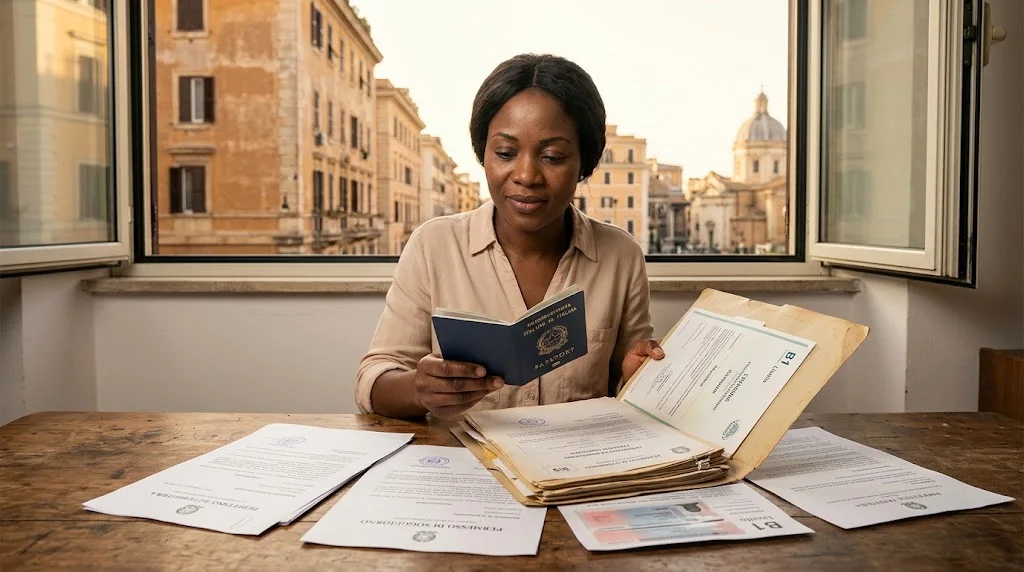
Italian Citizenship by Naturalization: The 10-Year Path for Non-EU Residents
Table of Contents
- What Counts as the Ten Years
- What Can Interrupt the Countdown
- The B1 Language Requirement
- Other Core Requirements
- The Application Process
- Reduced Timelines for Specific Circumstances
- What Naturalization Doesn’t Require That People Often Assume
- Planning Your Ten-Year Timeline Realistically
- Frequently Asked Questions
- Does the ten-year clock reset if I switch visa categories?
- How long does naturalization actually take once I apply?
- Do I need to give up my original citizenship to naturalize as Italian?
- Building Toward Naturalization From Day One
For non-EU residents without a qualifying ancestry claim or marriage to an Italian citizen, naturalization after ten years of legal residence is the standard path to Italian citizenship, and understanding exactly what counts toward that ten years, and what can interrupt it, matters considerably for anyone planning around this timeline.
What Counts as the Ten Years
The ten-year requirement generally means ten years of continuous, legal residence in Italy, holding a valid residence permit throughout. This isn’t simply ten years since your first arrival; it specifically requires the residence to be continuous and legally documented, meaning any period spent without a valid permit, or with genuine gaps in your legal residence status, doesn’t count toward the total and can, in more serious cases, reset the clock entirely. This strictness is precisely why applicants who’ve experienced any interruption in their residence history should seek clarity on how that gap affects their timeline well before assuming they’ve reached the ten-year mark.
What Can Interrupt the Countdown
- Extended absences from Italy, generally beyond what’s considered normal travel, can raise questions about whether your residence was genuinely continuous.
- Gaps in valid residence permit status, even brief lapses between permit renewals if not properly bridged, can create documentation problems for your eventual application.
- Switching between visa categories doesn’t necessarily reset the clock, provided your legal residence remained continuous throughout the transition, but this is worth confirming for your specific situation rather than assuming automatically.
Keeping a personal, organized record of your residence history, permit dates, and any travel throughout the decade genuinely helps when it’s time to demonstrate continuity to the Prefettura’s satisfaction.
The B1 Language Requirement
Naturalization requires demonstrated B1 Italian language proficiency, verified through a recognized certification exam. This is a genuinely significant requirement for applicants who haven’t achieved conversational fluency, and starting language study years before your ten-year mark, rather than cramming in the final year, gives considerably more realistic odds of passing comfortably.
Other Core Requirements
- Sufficient, documented income, generally benchmarked against Italy’s social allowance figures, demonstrating self-sufficiency without reliance on social assistance.
- A clean criminal record, both in Italy and, where relevant, in your country of origin and any other country of significant residence.
- No outstanding public security concerns or grounds for exclusion under Italian immigration law.
These requirements, taken together, are what an immigration attorney means by “demonstrated integration” in practice: a documented, coherent picture of stable, lawful, self-sufficient life in Italy over the full residency period.
The Application Process
Applications are submitted to the Ministero dell’Interno, generally through the local Prefettura, and involve substantial documentation: proof of continuous residence throughout the ten-year period, language certification, income documentation, and criminal record checks. Processing times for naturalization applications have historically run considerably longer than most visa processes, sometimes multiple years from submission to decision, worth factoring into realistic planning rather than assuming a quick turnaround once you’ve hit the ten-year mark. Current, official application procedures and required forms are published by the Ministero dell’Interno, worth checking directly rather than relying on secondary summaries given how document-heavy and procedurally specific this application is.
Reduced Timelines for Specific Circumstances
EU citizens face a reduced four-year residence requirement rather than the standard ten years. Recognized refugees and stateless individuals face a five-year requirement. These reduced timelines reflect specific legal categories rather than general exceptions, so confirming whether any reduced timeline genuinely applies to your situation, rather than assuming the standard ten years automatically applies, is worth doing directly with an immigration professional if your circumstances are relevant to any of these categories. Applicants sometimes mistakenly assume marriage to an Italian citizen automatically reduces the naturalization timeline as well, when in fact marriage runs as its own entirely separate path with its own distinct timeline, not a modifier applied to the standard naturalization route.
What Naturalization Doesn’t Require That People Often Assume
Naturalization doesn’t require renouncing your existing citizenship, since Italy permits dual citizenship. It also doesn’t require Italian ancestry of any kind, unlike jure sanguinis, making it accessible to long-term residents regardless of family background, provided the residence, language and other core requirements are met. This universality is precisely what makes naturalization the fallback path worth understanding even for applicants primarily pursuing jure sanguinis or marriage-based citizenship, since building residence time toward this option costs nothing extra and provides a genuine safety net if the other path doesn’t ultimately succeed.
Planning Your Ten-Year Timeline Realistically
Given how long processing itself can take once an application is submitted, and how strictly continuous residence documentation is scrutinized, treat naturalization as a genuinely long-term project spanning well beyond the headline ten-year residence figure itself. Building a complete, organized record of your residence history, permit renewals, and any travel throughout the ten years makes the eventual application process considerably smoother than reconstructing this history retroactively.
Read Also: Italy’s Top Tax Rate Isn’t Really 43%: What the Myth Gets Wrong
Frequently Asked Questions
Does the ten-year clock reset if I switch visa categories?
Not necessarily, provided your legal residence remained continuous throughout the transition, though this should be confirmed for your specific situation rather than assumed automatically.
How long does naturalization actually take once I apply?
Processing can take considerably longer than most visa processes, historically sometimes multiple years from submission to final decision, worth factoring into realistic long-term planning.
Do I need to give up my original citizenship to naturalize as Italian?
No, Italy permits dual citizenship, so naturalization doesn’t require renouncing your existing nationality, though you should separately confirm your home country’s own rules.
Building Toward Naturalization From Day One
Start Italian language study early rather than waiting until your ten-year mark approaches, maintain careful documentation of your continuous residence throughout, and confirm any reduced-timeline eligibility that might apply to your specific circumstances. Current naturalization requirements and application procedures are published by the Ministero dell’Interno, Italy’s Ministry of the Interior. Treating naturalization as a decade-long project from the very start of your Italian residency, rather than a task to consider only once the ten-year mark is in sight, produces a meaningfully smoother eventual application.